A weekend in the Big Smoke — no van, no Pepper, just trains, food, museums and a little London magic. From champagne at 12pm. to an Uber phone rescue, it was a trip to remember.
I wondered about the title of this post. I’ve always said “London, baby!” whenever I mention the capital, but for the life of me, I couldn’t remember where it came from. Did I make it up?
Fortunately, Google came to my rescue (as it so often does). It’s from Friends — “The One with Ross’s Wedding.” Mystery solved.
So, this weekend, Mark and I were London bound — sans Pepper and the van — to play tourists in the Big Smoke. (And yes, I also looked that one up. If you’re curious, the excellent article at the Museum of London explains the origins of the phrase.)
We had only one true destination: the Natural History Museum, a place that’s been on my bucket list for a very long time. So long, in fact, it’s almost as old as some of the exhibits.
Friday: Southbound to the Big Smoke
After dropping Pepper off for her all-inclusive weekend break at “Nanna’s Dog Spa and Hotel,” we headed to Manchester Piccadilly to catch the train south.
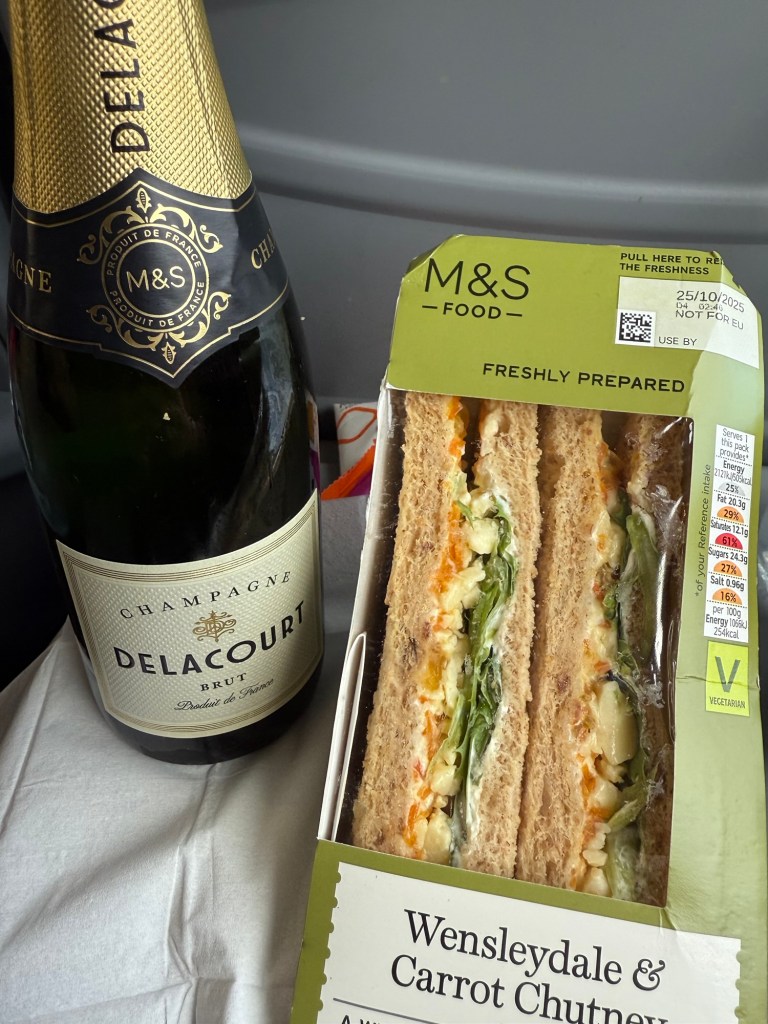
I love train travel — especially when it’s for pleasure rather than work. It’s far better to gaze out of the window than at a laptop screen. The journey was enhanced by a bottle of champagne (yes, at 12pm.), and we arrived at Euston by early afternoon.
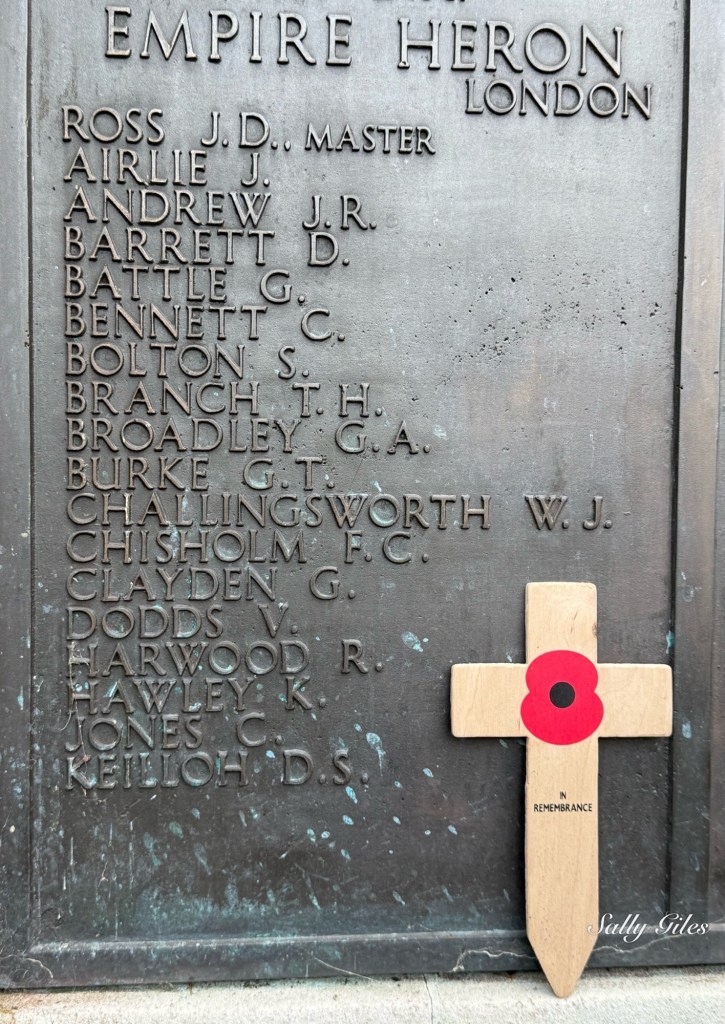
After dropping our bags at the hotel, our first stop was the Tower Hill Memorial, to pay our respects to William John Challingsworth — always known in the family as Great Uncle Billy, “Lost at Sea”.
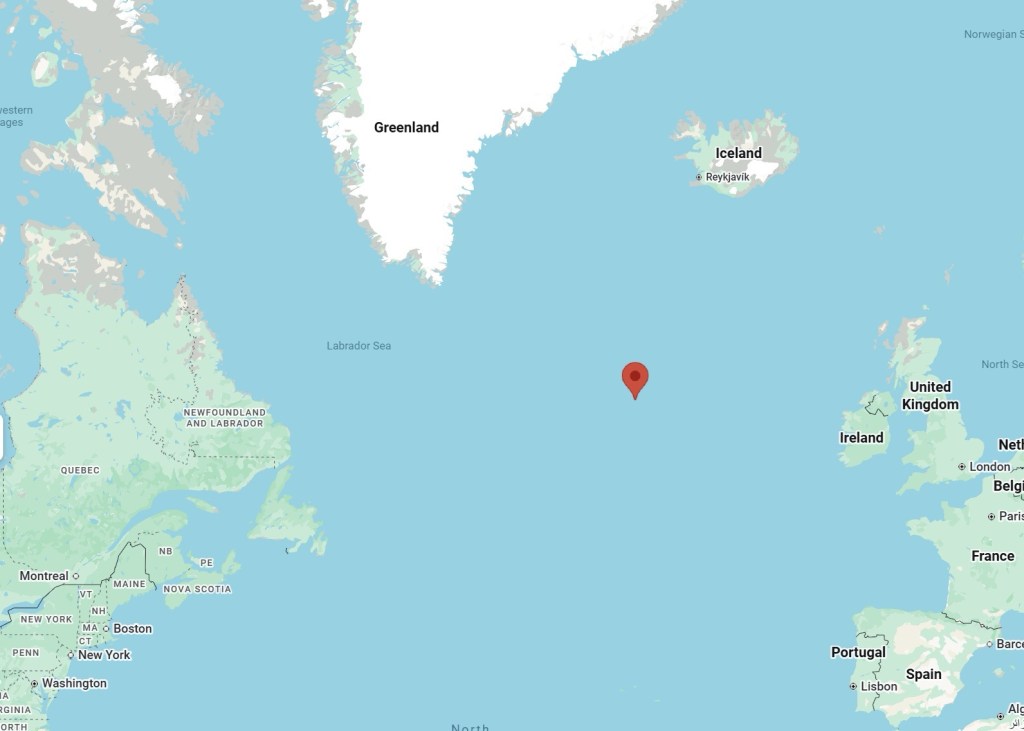
William John Challingsworth (20) served as Assistant Steward on the SS Empire Heron in the Merchant Navy. On 15 October 1941, the ship was torpedoed and sunk by German submarine U-568 SE off Cape Farewell, Greenland. All hands were lost — the master, 33 crew members, and nine gunners.
Read more at wrecksite: https://wrecksite.eu/wreck.aspx?11904
William’s name appears on Panel 42 of the Tower Hill Memorial. We spent a few quiet moments in the garden and left a small cross in his memory before continuing on our way.
We had no real itinerary after that, so we simply decided to wander; London can feel like a film set — familiar, yet still astonishing when you see it with your own eyes.
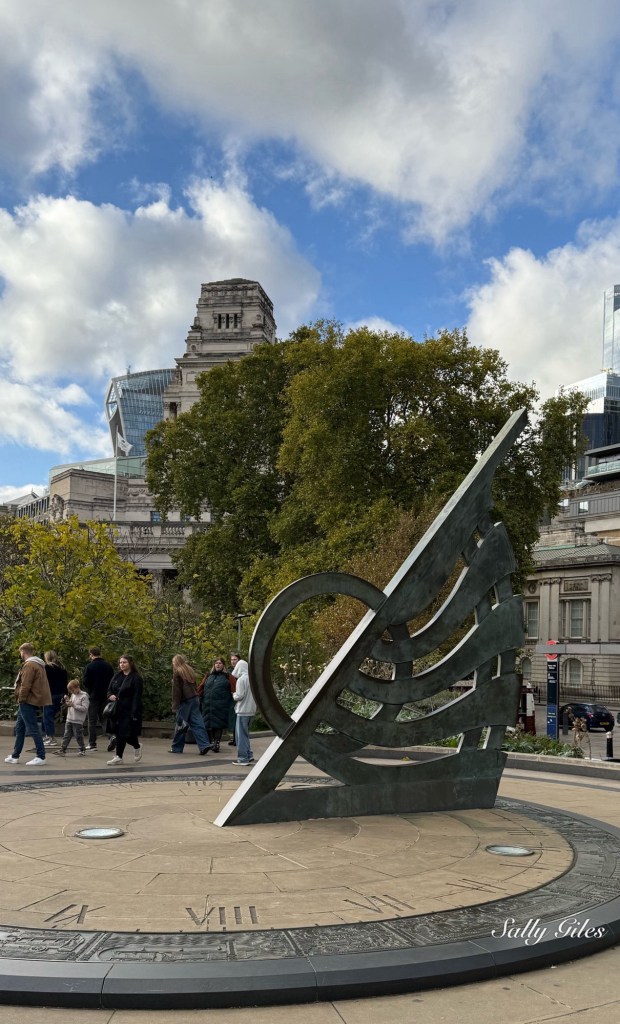

The Tower and the Bridge
After leaving the memorial garden, we crossed the road to the Tower of London, its ancient stone walls rising pale and solid against the grey afternoon sky.
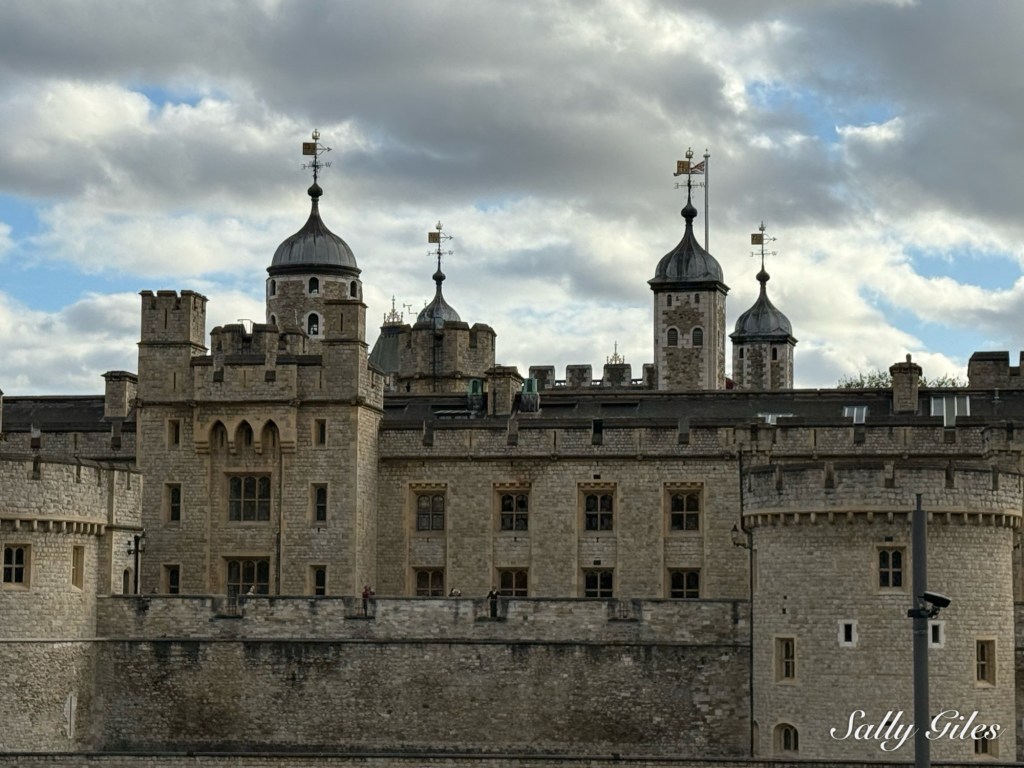

No matter how many times you’ve seen it in photographs, nothing quite prepares you for the sheer presence of the place. The weight of history clings to every stone — whispers of queens and traitors, ravens and crowns. It’s strange to think that beneath the chatter of tourists and the hum of buses, the ground has soaked up nearly a thousand years of England’s stories.
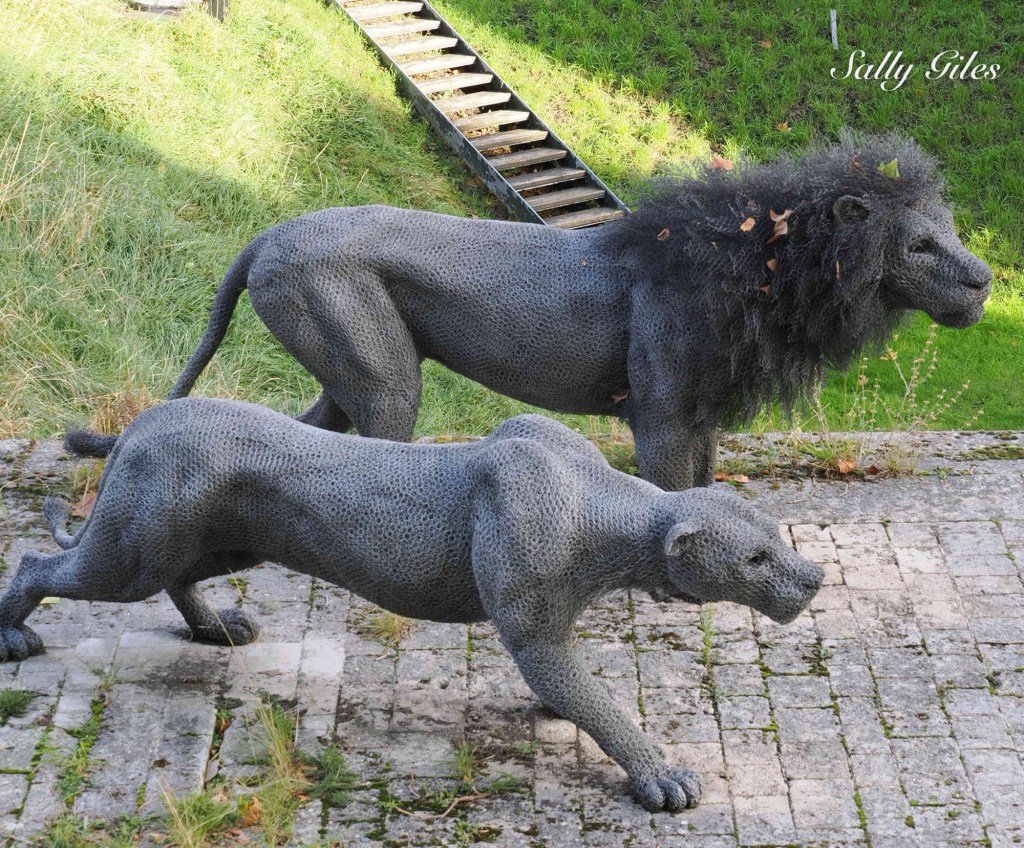
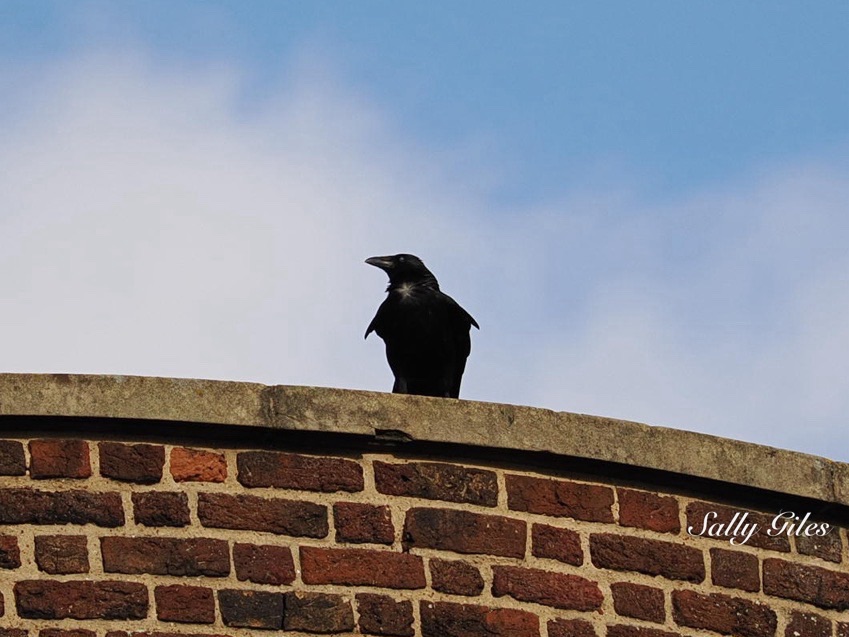
The Tower began life under William the Conqueror in the 1070s, a fortress to watch over his new capital. Over the centuries it became many things: royal residence, armoury, menagerie, mint, prison, and, most notoriously, execution ground. From Anne Boleyn to Lady Jane Grey, history seems to hang heavy in the air. Even the ravens — sleek, black, and solemn — lend an air of myth to the place. Legend insists that if they ever leave, the kingdom will fall. Judging by their rather spoiled appearance and steady diet, I don’t think that’s likely anytime soon.
Just beyond the Tower stands Tower Bridge, proudly spanning the Thames with its blue-painted steel and grand Gothic turrets. So often mistaken for London Bridge, it’s the one that adorns every postcard and film montage. Built in the late 1800s, its twin bascules were once raised by steam power to allow tall-masted ships to pass through. The bridge slowly lifts for passing vessels, the great sections parting like the wings of some mechanical bird. Even after more than a century, it’s a feat of engineering beauty — part palace, part machine.
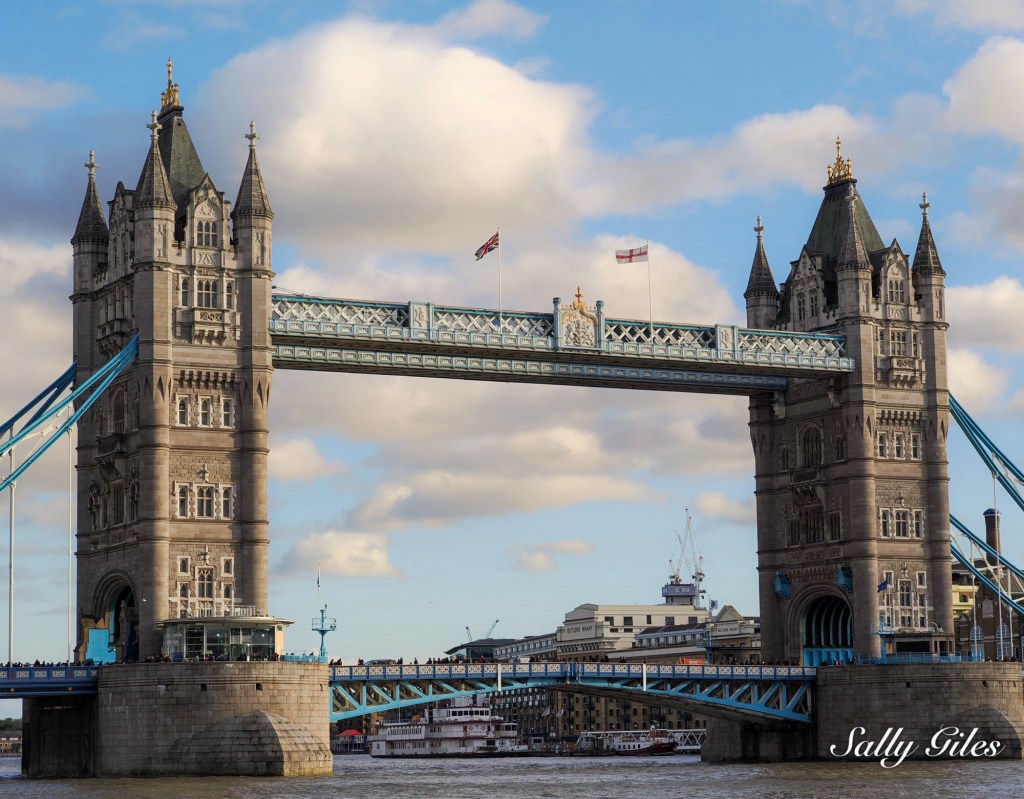
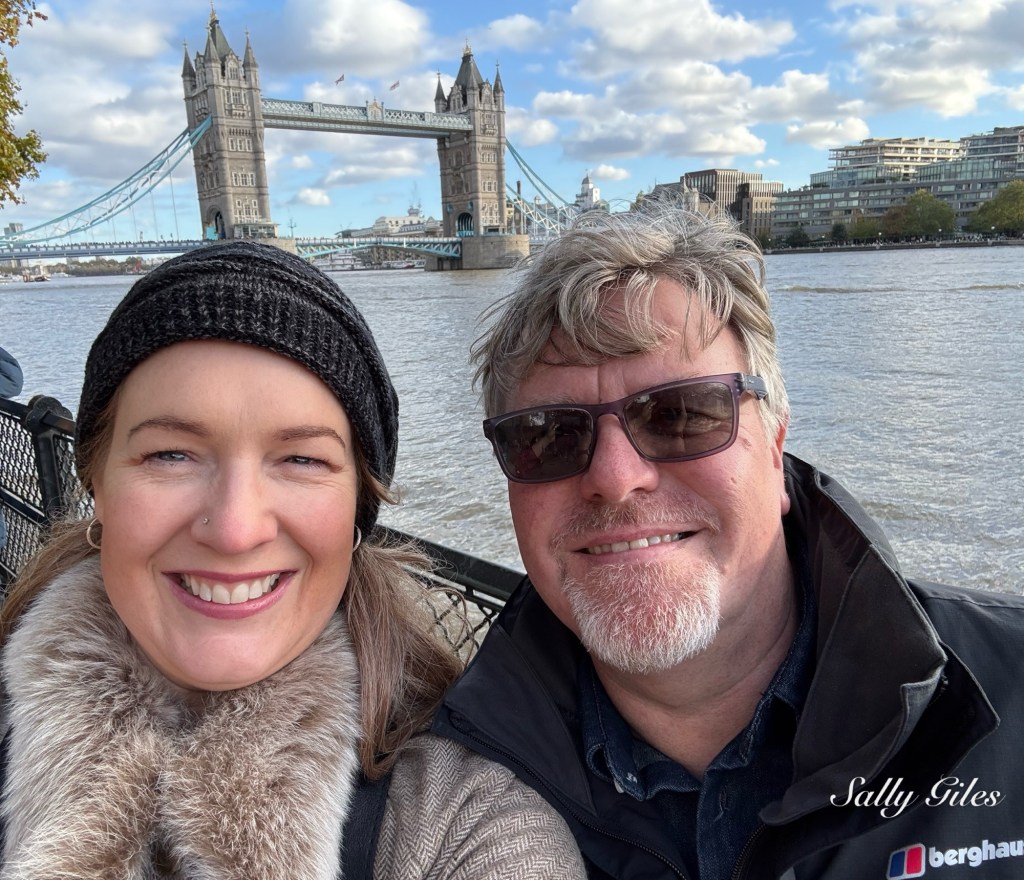
Standing there between the Tower and the Bridge, the river stretching silver in both directions, you can feel the entire sweep of London’s history — the medieval fortress beside the Victorian marvel, ancient stone beside iron and steel, all bound together by the slow, patient flow of the Thames.
Evening Wanderings
Leaving the Tower behind, we followed the curve of the river, where the evening light caught the carvings high on the old buildings — stone flourishes half-forgotten above modern shopfronts. One in particular caught my eye: an eagle, wings spread wide as though still guarding the city below.
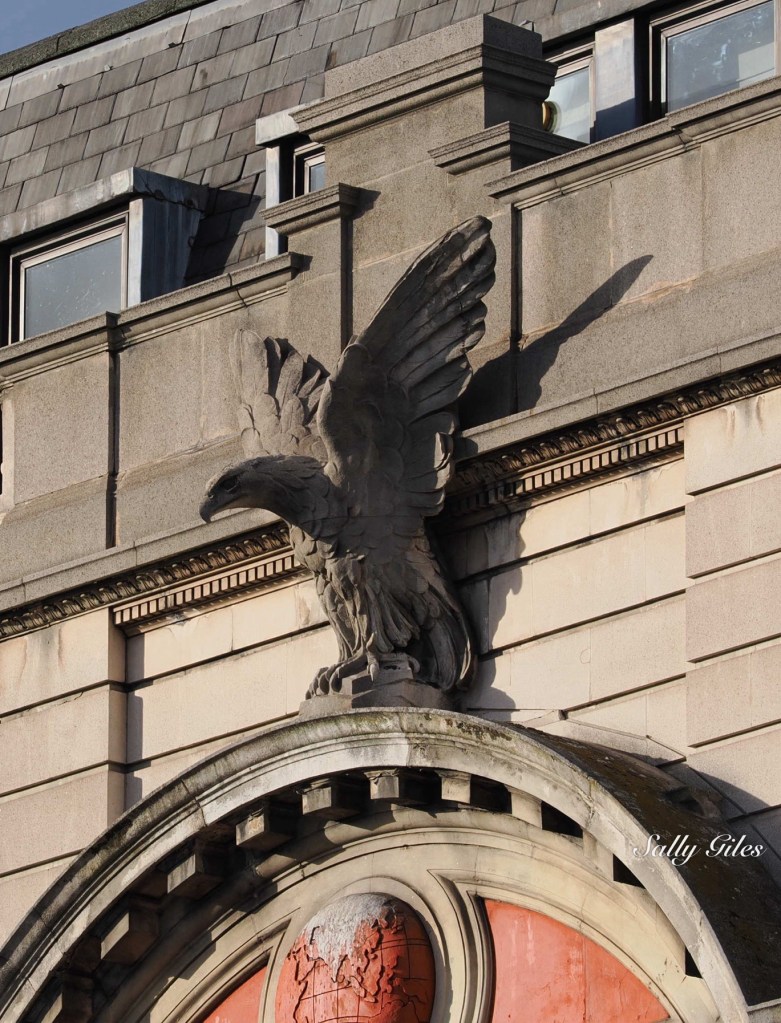
London rewards those who look up; its history hides not only in the grand landmarks but in the quiet corners — the weathered façades and fading details that most people walk past without seeing.
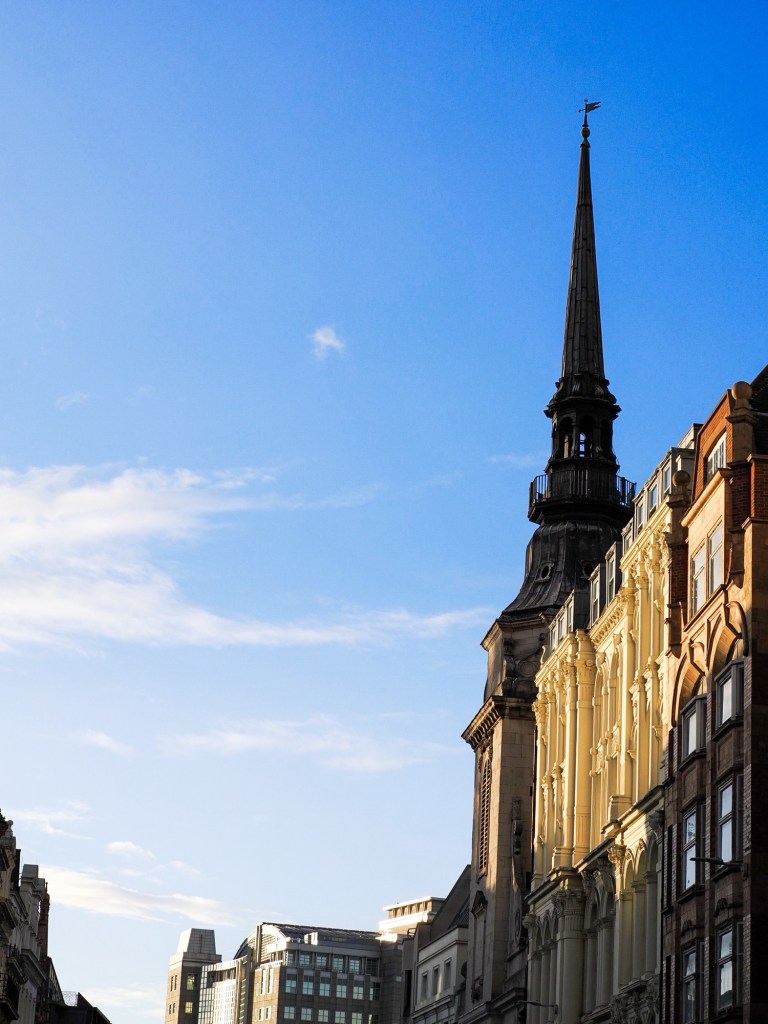
Beyond the rooftops, the skyline rose in a curious harmony — ancient church spires standing shoulder to shoulder with the sharp angles of new skyscrapers. The contrast is almost poetic: bells and glass, saints and steel. It feels as though London’s story is written vertically — every century adding another layer, one above the other, all of them somehow coexisting.

Following the River
Continuing down the river, we passed through Billingsgate, once the heart of London’s fish trade.
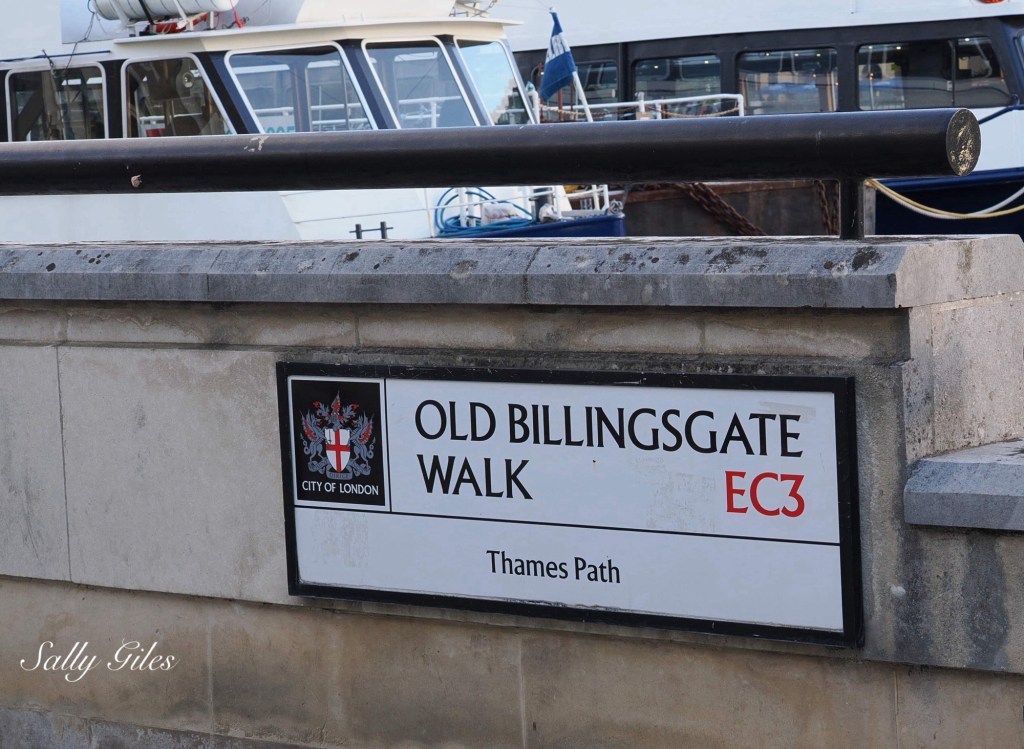
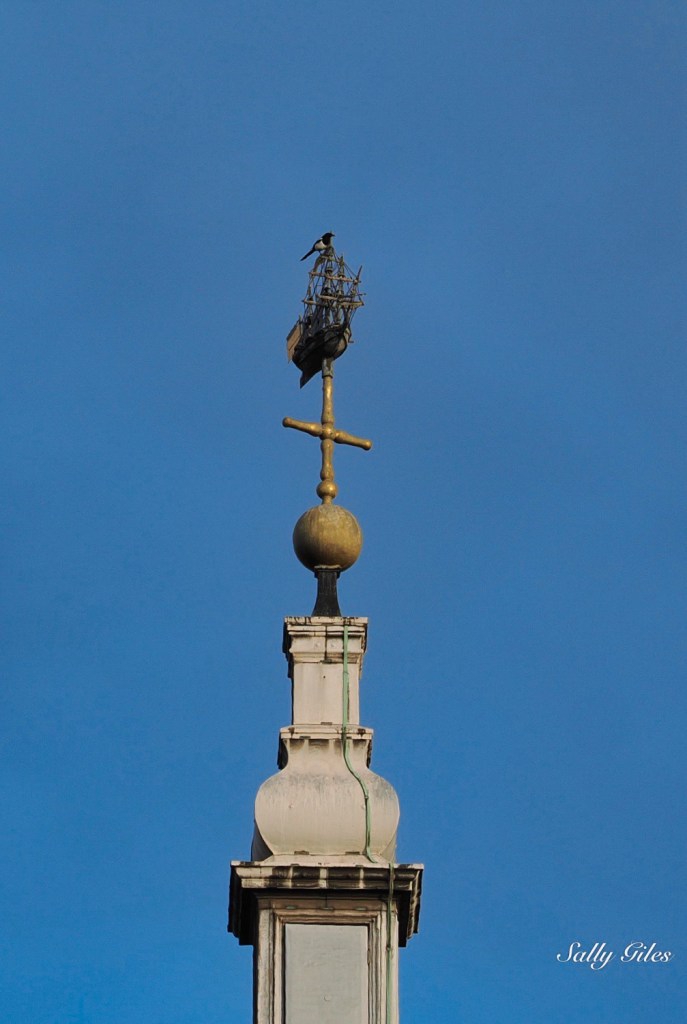
The air no longer smells of salt and scales, but the echoes of its history are everywhere. The ornate street lamps are topped with gilded fish and dolphins; iron weathervanes shaped like cod and mackerel glint in the light — a whimsical nod to the centuries when traders here shouted prices over the clatter of barrows and the slap of wet cobblestones.
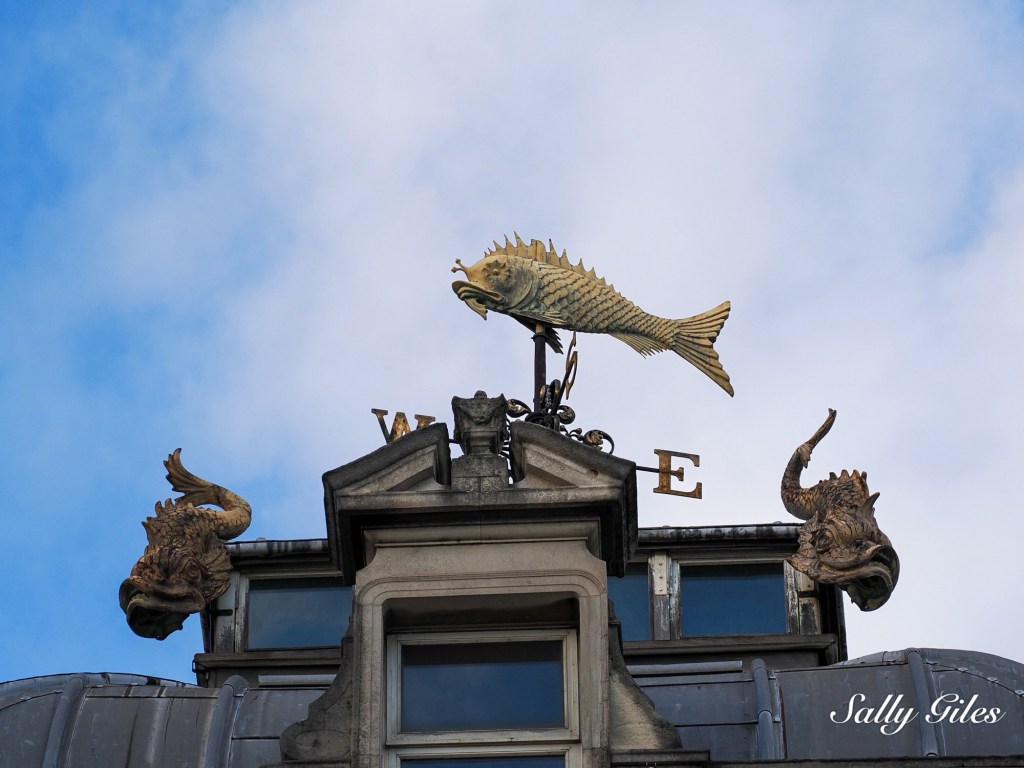
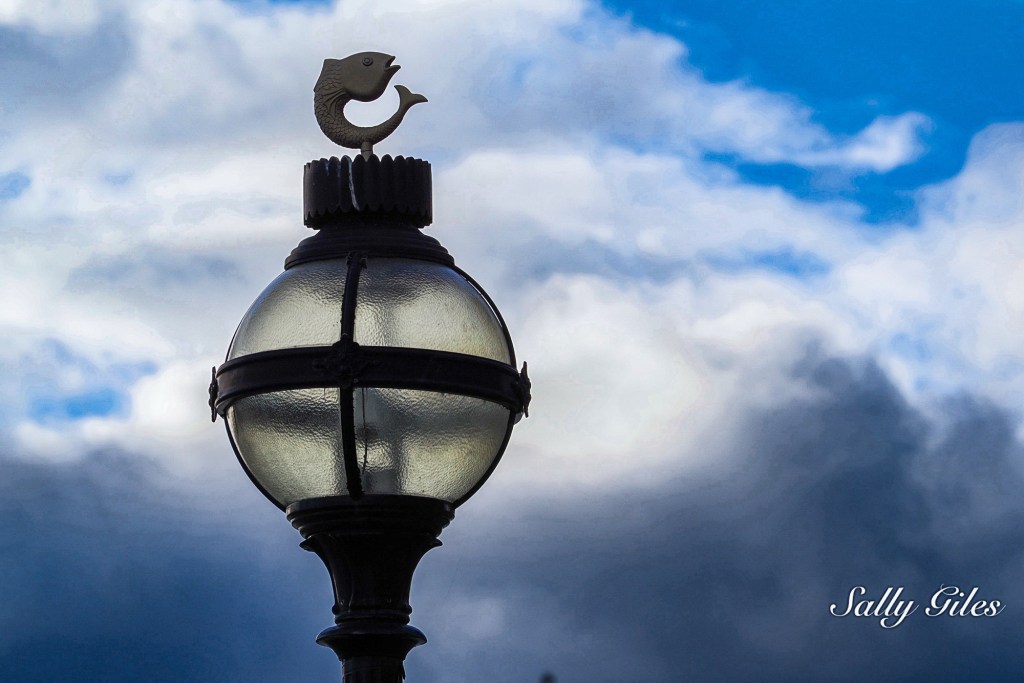
I loved that the city hadn’t scrubbed away its working past; it lingers, proud and unpolished, in the details if you take the time to look up.
Moored on the water nearby, the grey hull of HMS Belfast rests in quiet contrast — a floating museum now, but once a Royal Navy cruiser that saw action during the Second World War and the Korean conflict. I paused for a moment, struck by how it sits between eras: the weight of war beside the working life of the river, both part of London’s living memory.
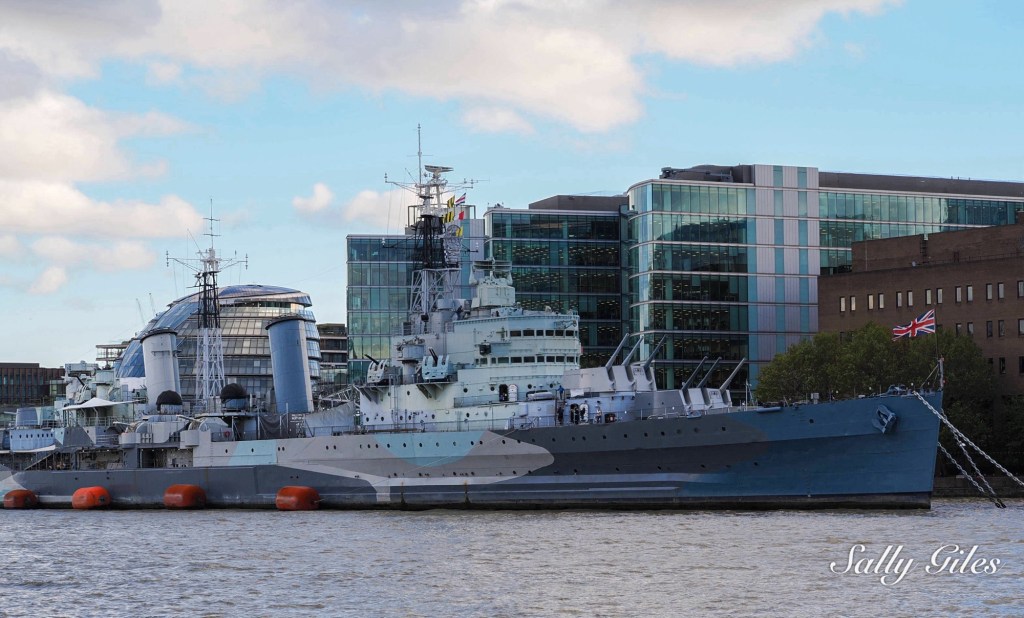
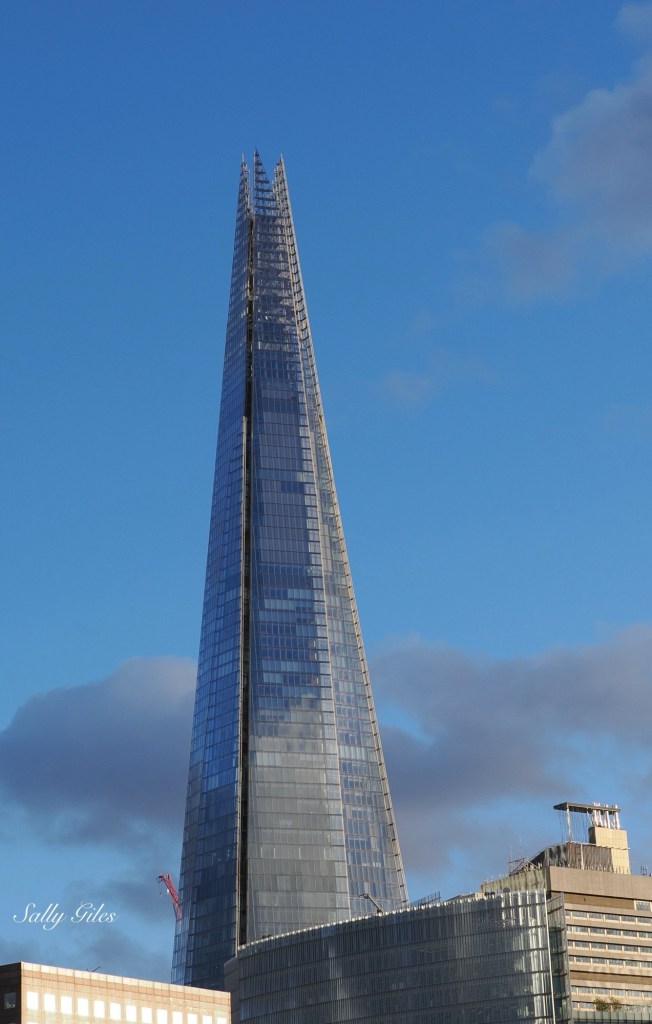
Across the Thames, the glass spear of The Shard catches the dying light — a modern sentinel gleaming over the city. The juxtaposition is striking: Billingsgate’s weathered brick and fish motifs on one bank, the skyward thrust of The Shard on the other. It’s London in miniature — history and ambition reflected together in the same stretch of water.
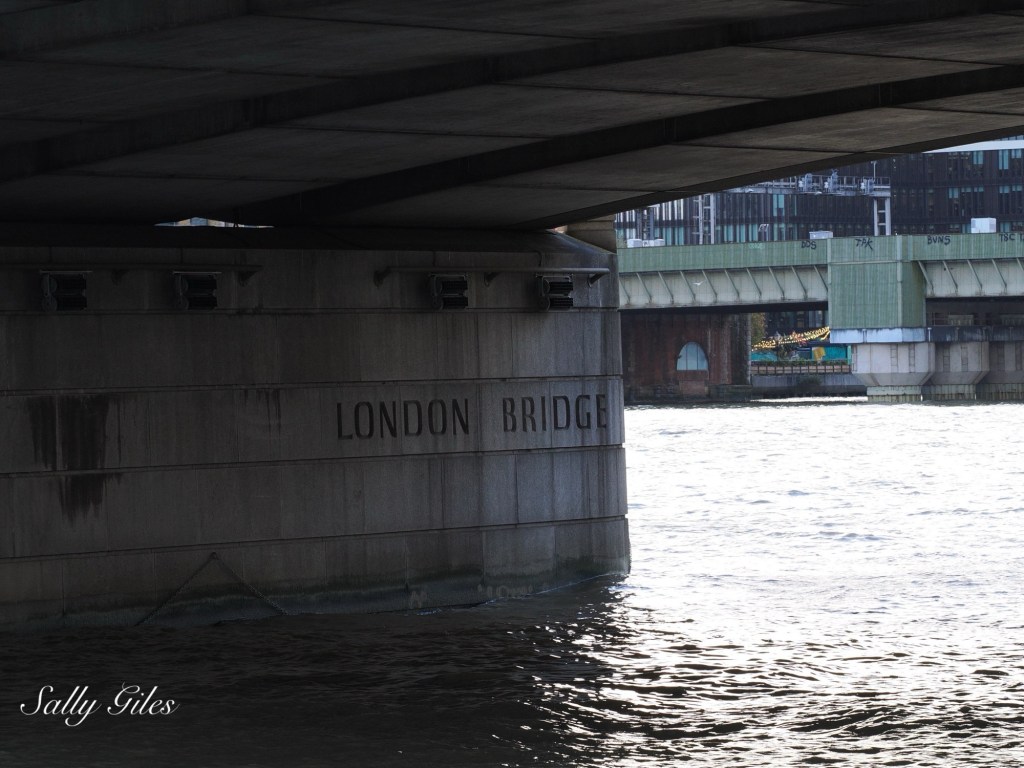
Following the riverside, we walked beneath London Bridge — yes, that London Bridge. The very one from the nursery rhyme we all grew up singing. It turns out, the song wasn’t just poetic licence — the bridge really was falling down. The 19th-century structure, weighed down by traffic and age, was sold in the 1960s to an American entrepreneur who shipped it stone by stone to Arizona, where it still stands today, spanning a canal in Lake Havasu City. London simply built another bridge in its place and carried on, as London always does.
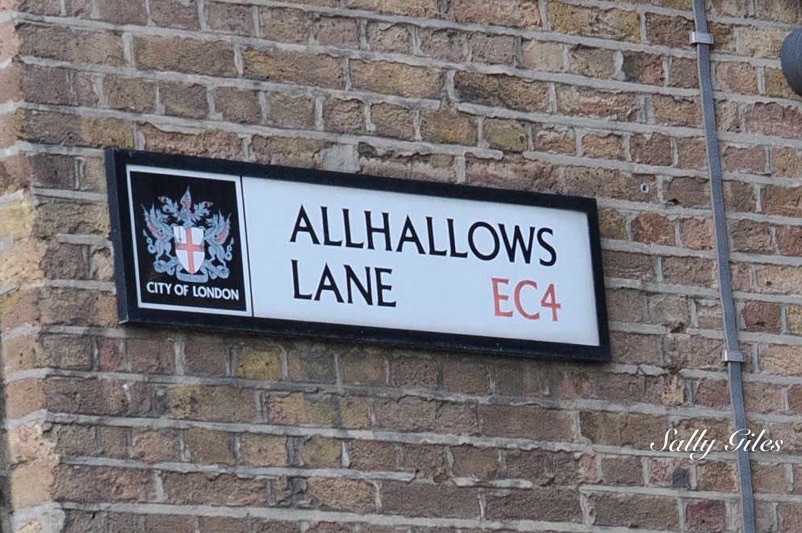
We skirted through the underground tunnel at All Hallows Lane, where echoes of footsteps seemed to follow us up toward the skyline — and there it was, unmistakable even in the fading light: St Paul’s Cathedral.
You cannot miss it. The great dome rises like a ship’s hull turned to the sky, solid and serene above the modern glass towers that crowd around it.
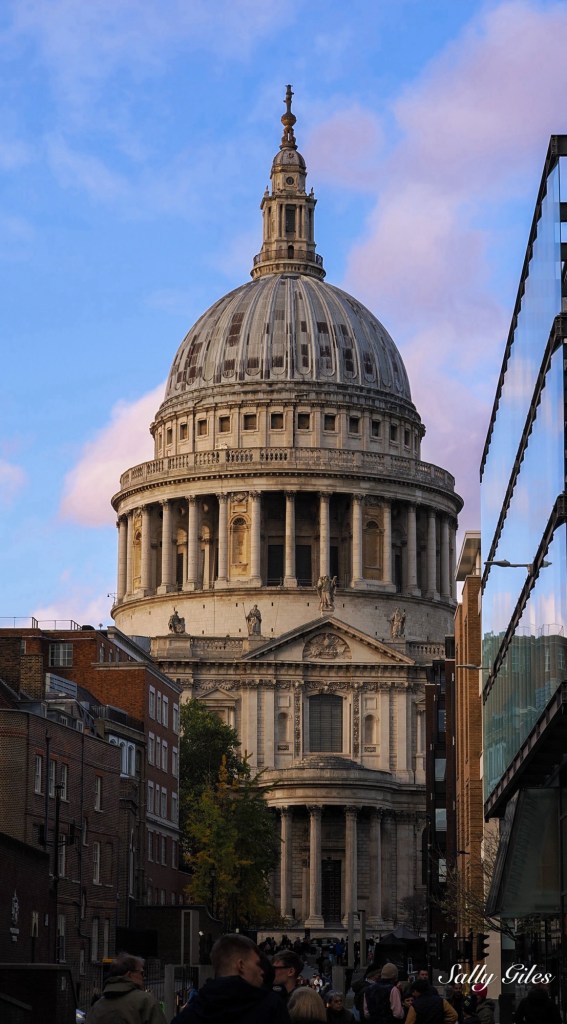
We left the Thames path here, anxious not to miss the opportunity to view the famous Cathedral. As we climbed the steps towards the cathedral, we passed the Royal College of Arms, its heraldic shields bright against the stone, and a beautiful white chapel tucked discreetly between two modern glass offices — not the Whitechapel of darker legend, but a quiet, elegant survivor of an older London.

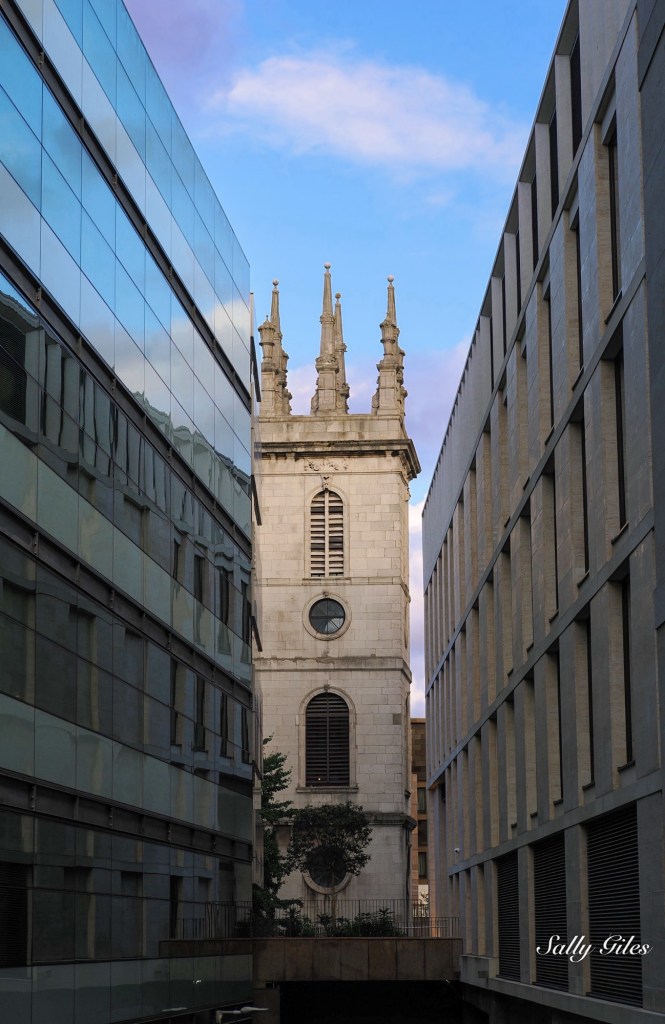
Nearby stands the National Firefighters Memorial, bronze figures poised mid-action, hoses raised toward an invisible blaze — a moving tribute to the men and women who fought the infernos of the Blitz.

St Paul’s
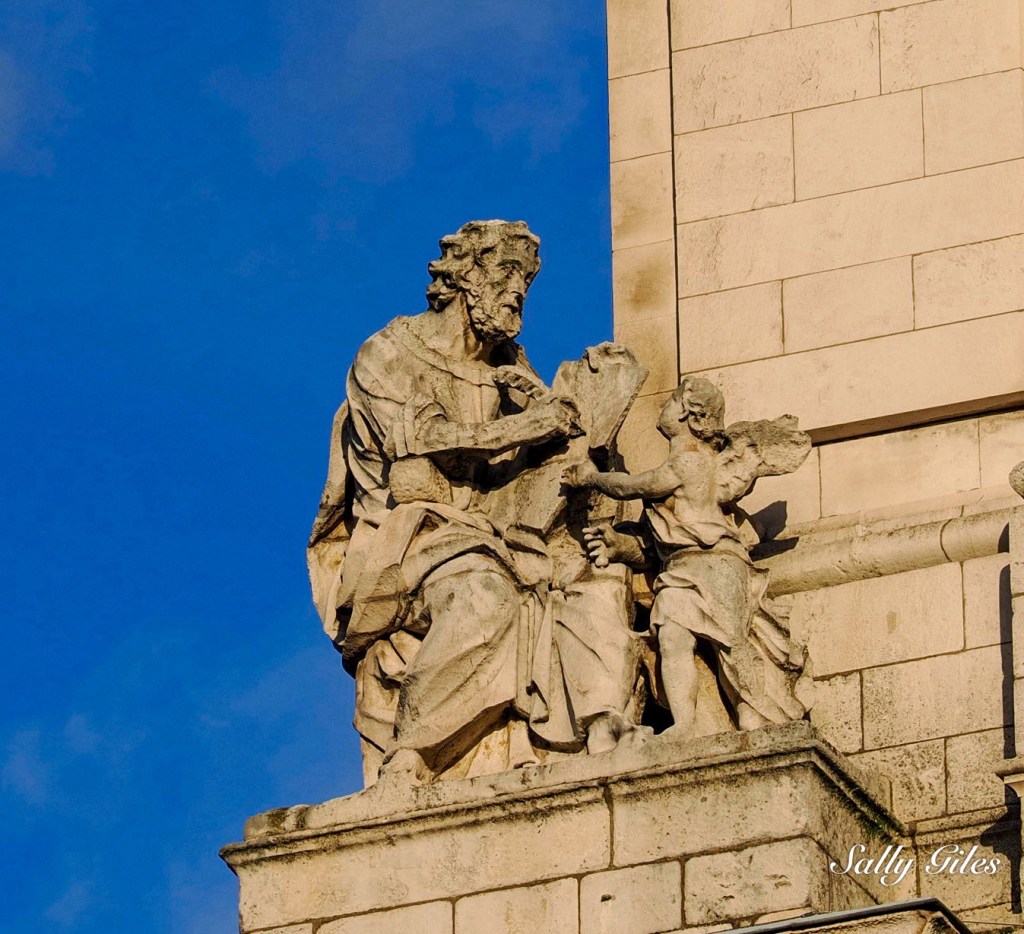
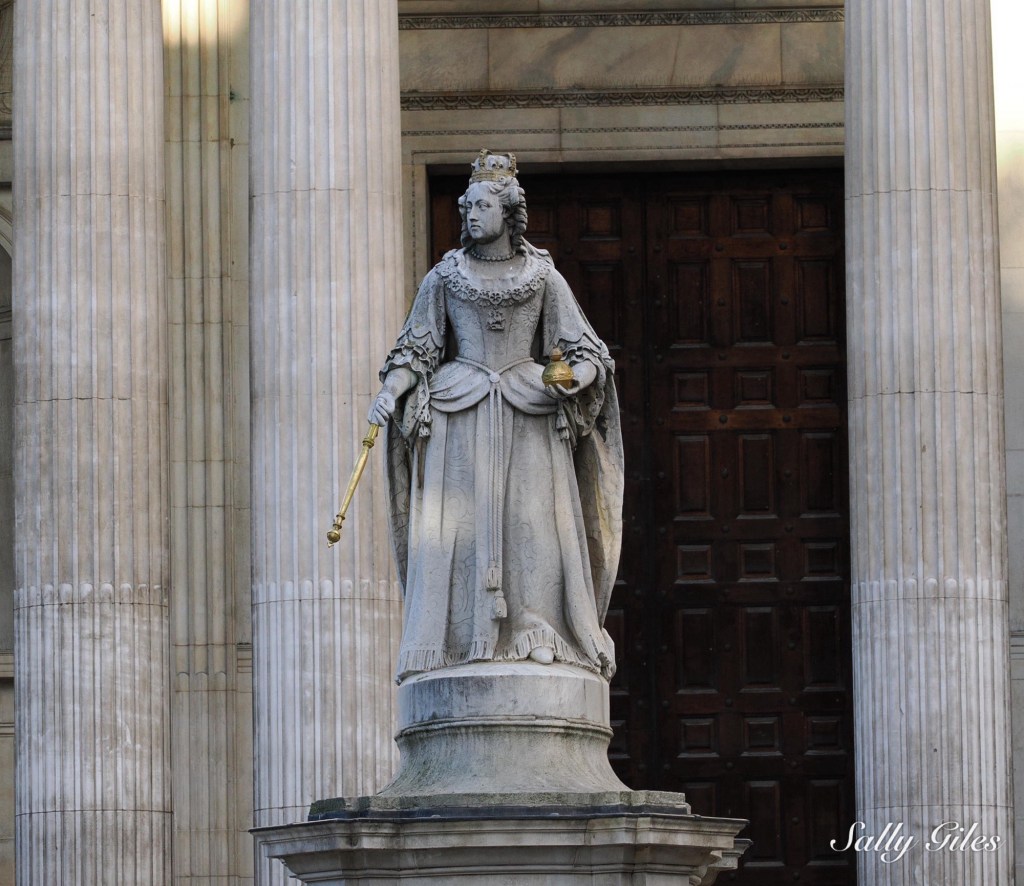
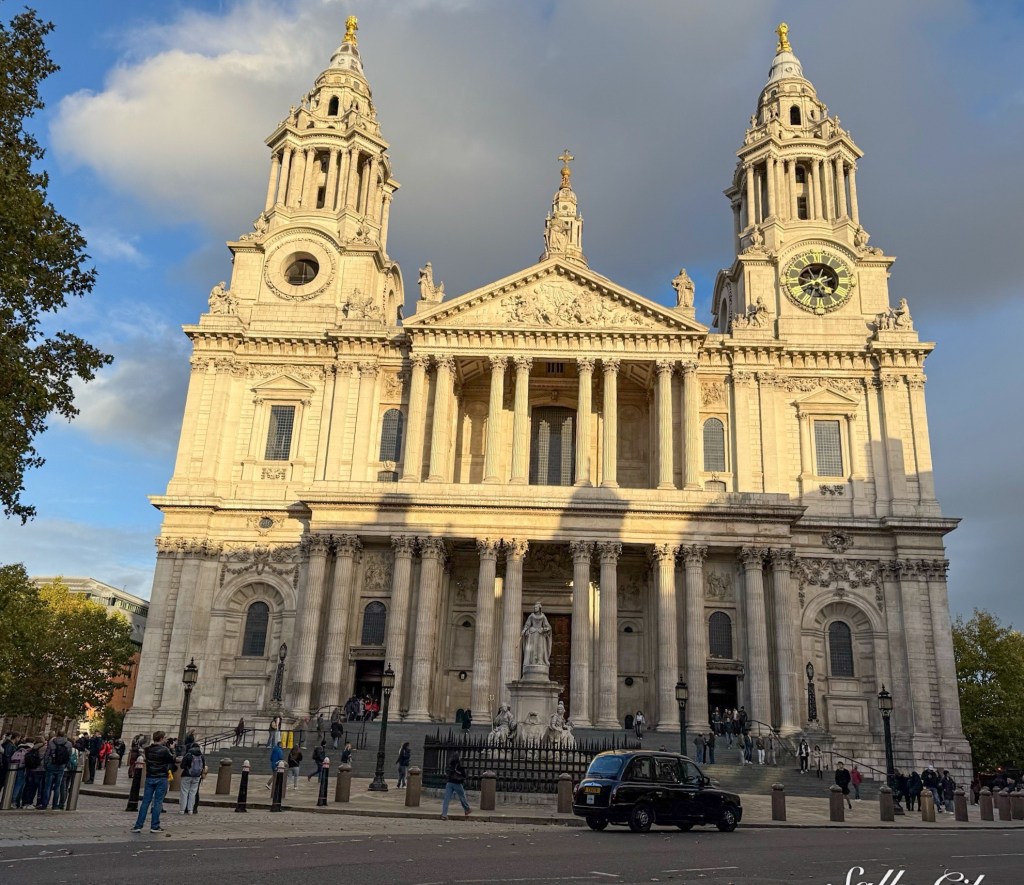
Viewing the ornate dome and stone structure of St Paul’s, I realised I knew little about its exterior — about the statues of apostles and evangelists carved into its façade, or the angels that keep vigil at its crest. Built by Sir Christopher Wren after the Great Fire of 1666, St Paul’s has seen London burn and rebuild, fall under bombs, and rise again. During the Blitz, its dome stood bright in the smoke, captured in that famous photograph that became a symbol of resilience.
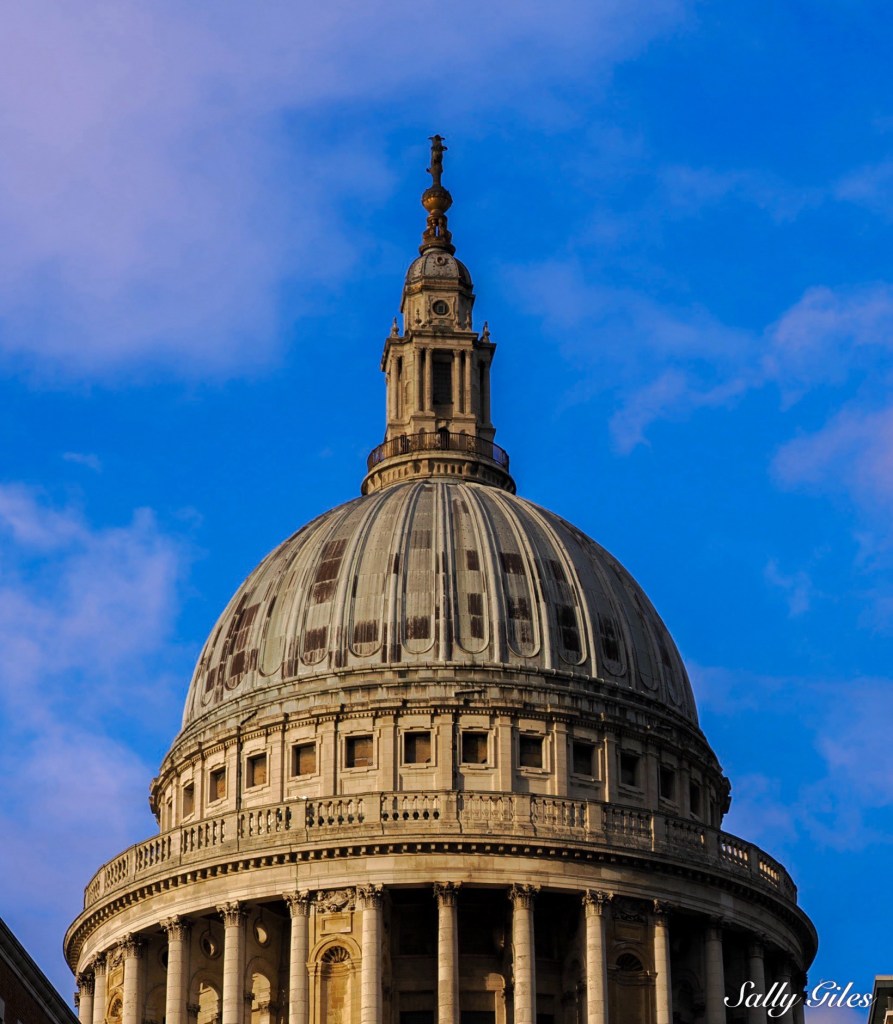
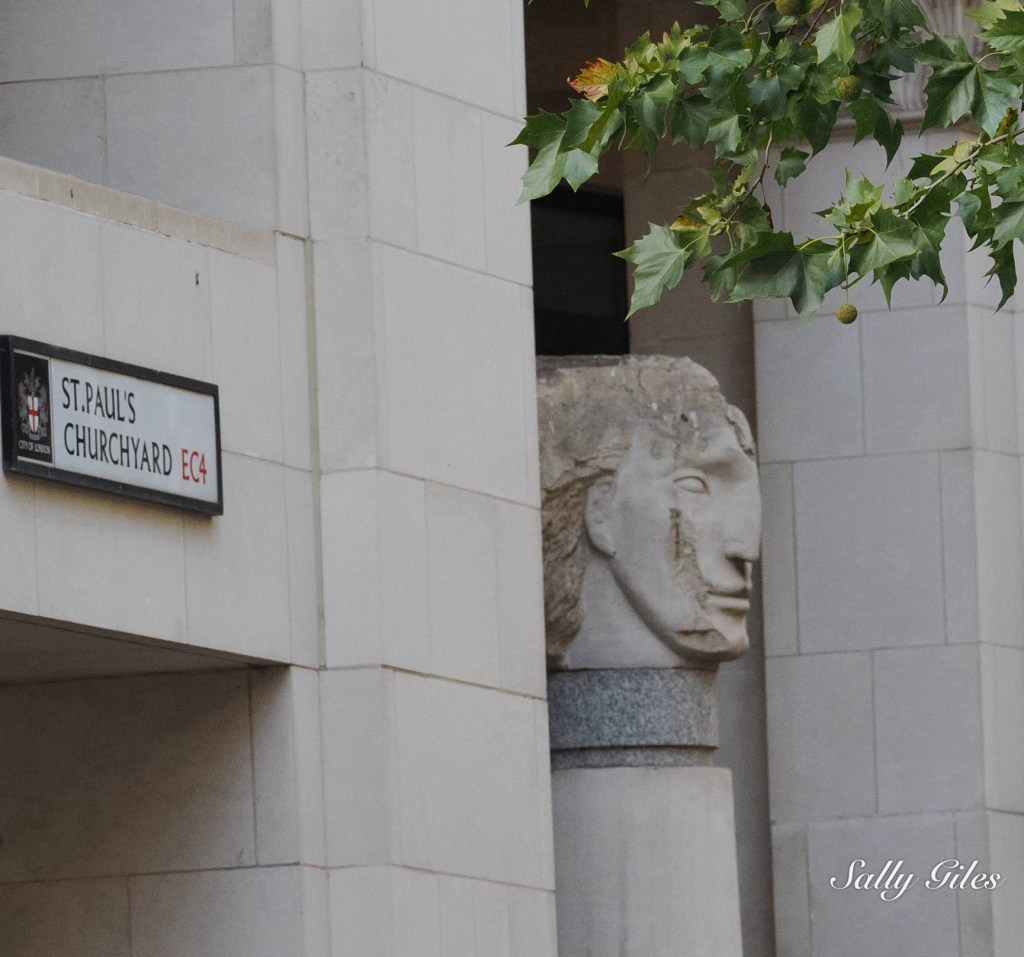
I took a few photographs of the carvings high above the portico, though I had no idea who they were — something to research later. Even as the daylight faded, the pale Portland stone seemed to hold the last of the sun. There’s something deeply reassuring about that building: steadfast, beautiful, and stubbornly timeless, no matter what London throws at it
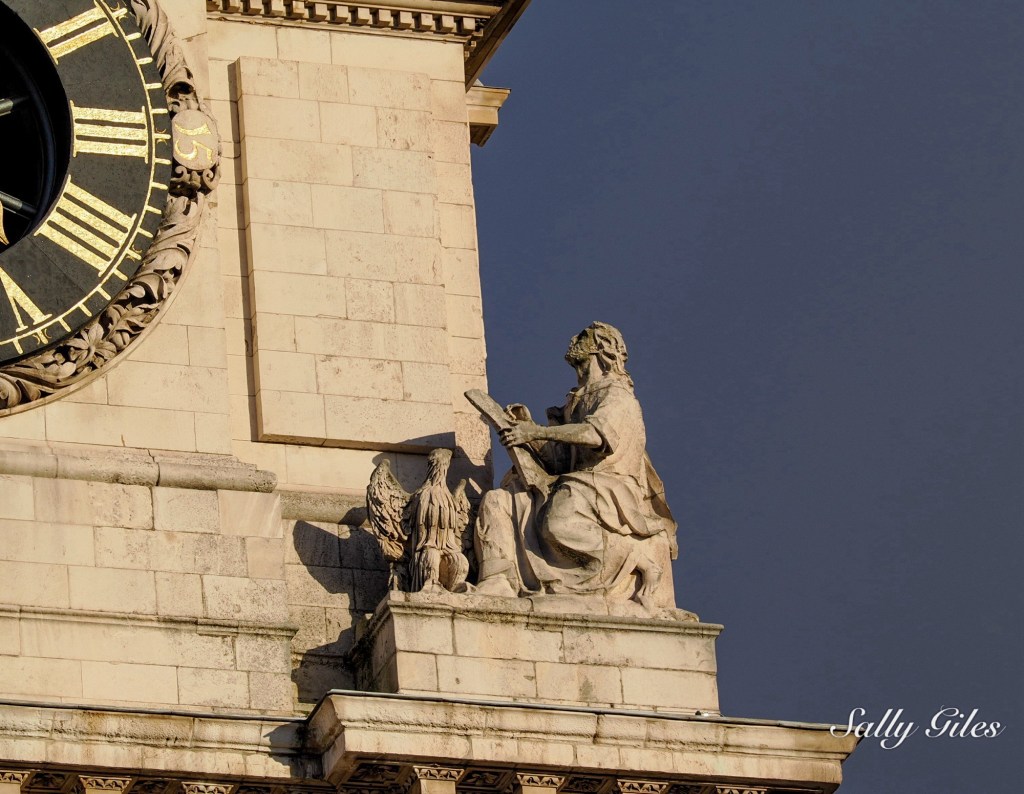
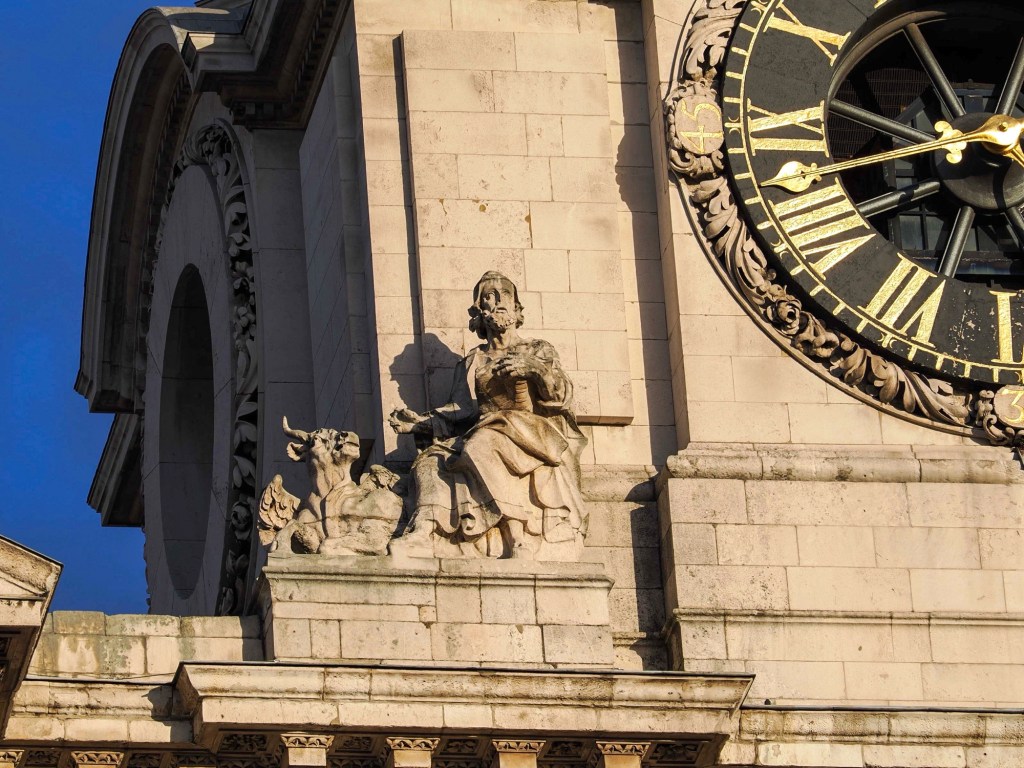
As the sun crept lower, we left St Paul’s and made our way back toward the Underground, the evening light softening the city’s sharp edges.
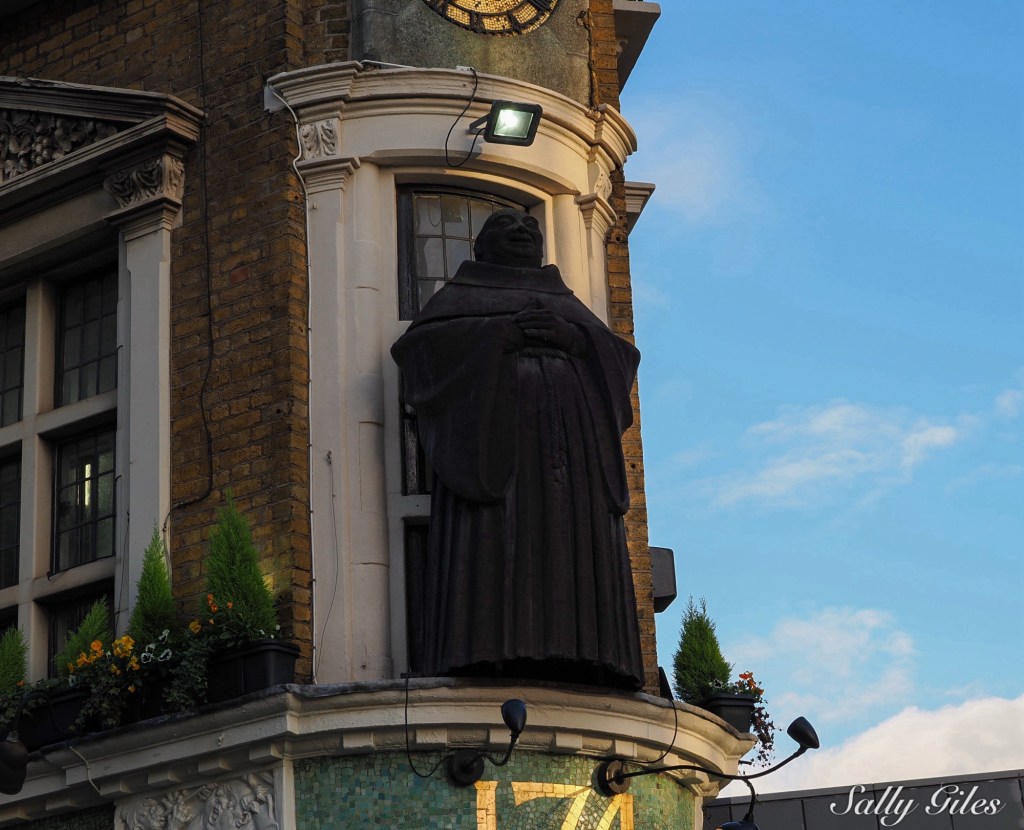
Our route took us past The Black Friar, a wedge-shaped Art Nouveau pub tucked neatly where Queen Victoria Street meets New Bridge Street. Its polished brass and dark green tiles gleamed in the fading sun, and a small crowd was already spilling out onto the pavement. Built in 1875 on the site of a Dominican friary dissolved by Henry VIII, it’s famous for its extraordinary interior — mosaics, copper reliefs and sculpted monks raising tankards in eternal good cheer. Through the window’s, the warm glow within hummed with history and laughter as people drank their ale.
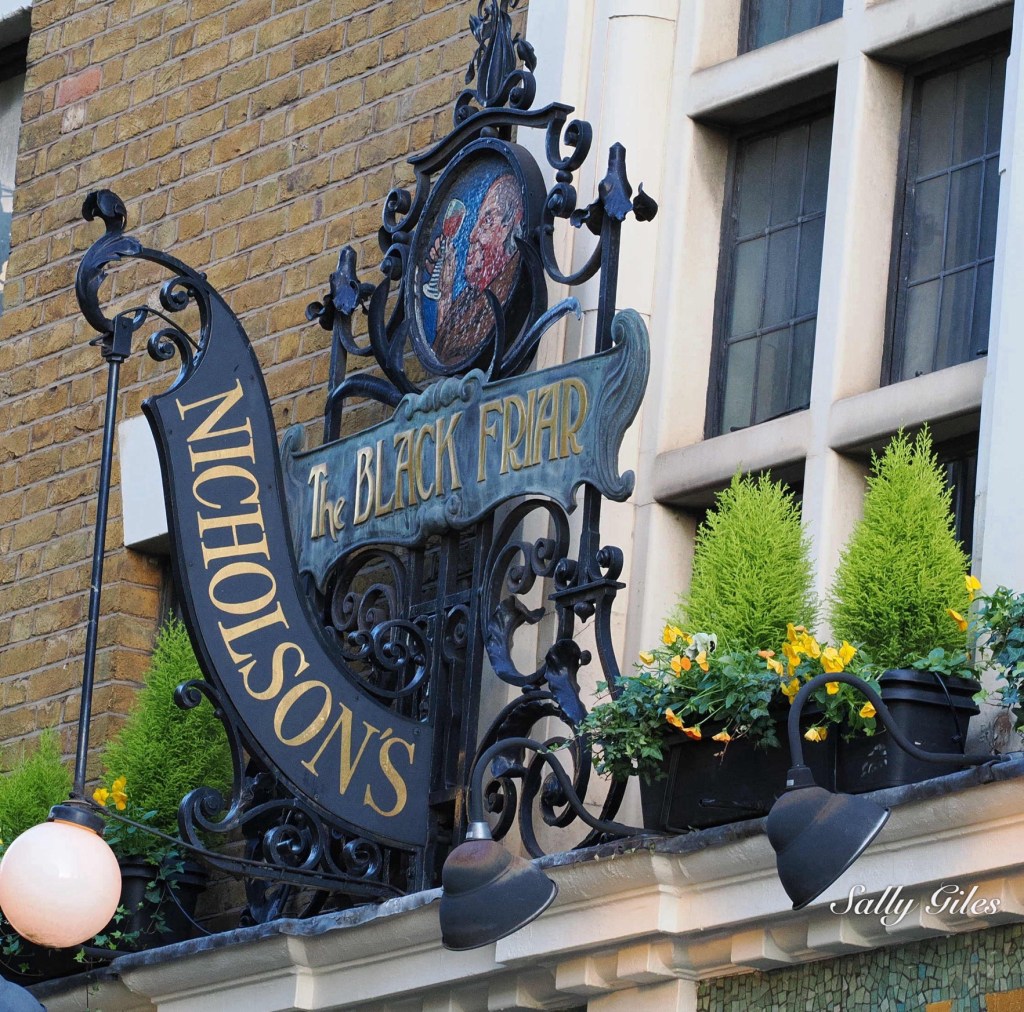
I
Crossing the street, the sky opened wide above the river. At the entrance to the Underground, I caught sight of the London Eye, its great wheel catching the last of the sunset. The glass capsules glimmered like drops of amber against the skyline, slowly turning above the Thames. Built to mark the millennium and opened in 2000, it was once the tallest Ferris wheel in the world and remains one of London’s most beloved landmarks — a symbol of the city looking forward even as it carries its past along the riverbanks.
And there, right on cue, came the final flourish — a red London bus gliding across the bridge. I stopped to take the photo: the Eye haloed in gold, the bus bold and bright in the foreground. It’s the sort of image that feels almost staged, but London has a way of offering you its clichés in the most perfect light.
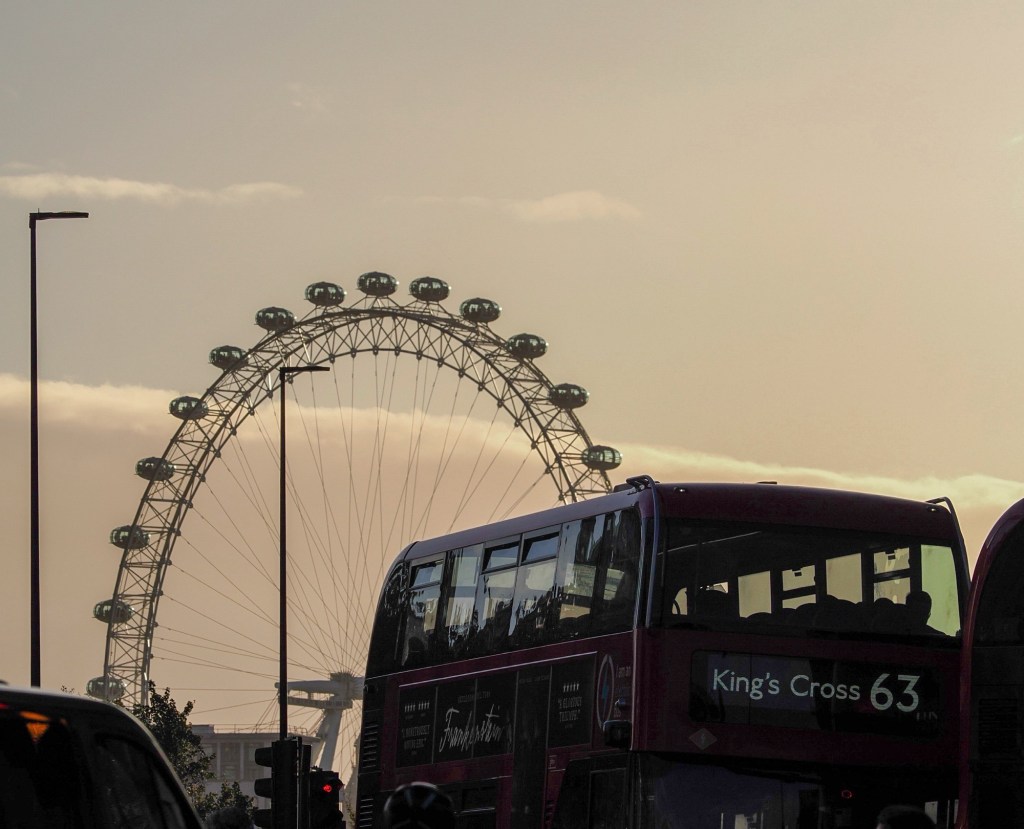
The red bus, of course, is more than just a postcard staple. It’s part of London’s heartbeat — first introduced in the 1920s, made iconic by the Routemaster in the 1950s, and some of the originals are still rumbling through every borough with that comforting diesel growl, although most are now electric buses. Watching it pass against the backdrop of the river, I couldn’t help but smile. It was the perfect closing note to the day: a reference to the old, and an example of the new, side by side, the city endlessly in motion.
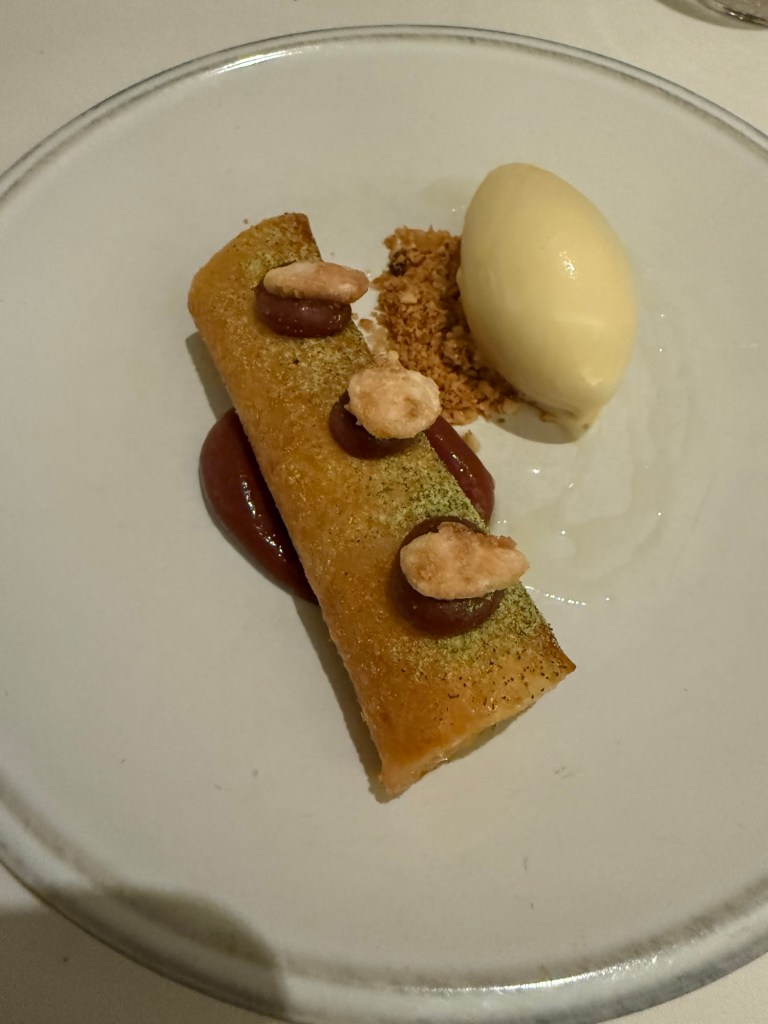
A quick Underground hop returned us to Kensington, to change then out again to where dinner awaited; Kitchen W8. We’d pre-booked the Game Tasting Menu with the accompanying wine flight.
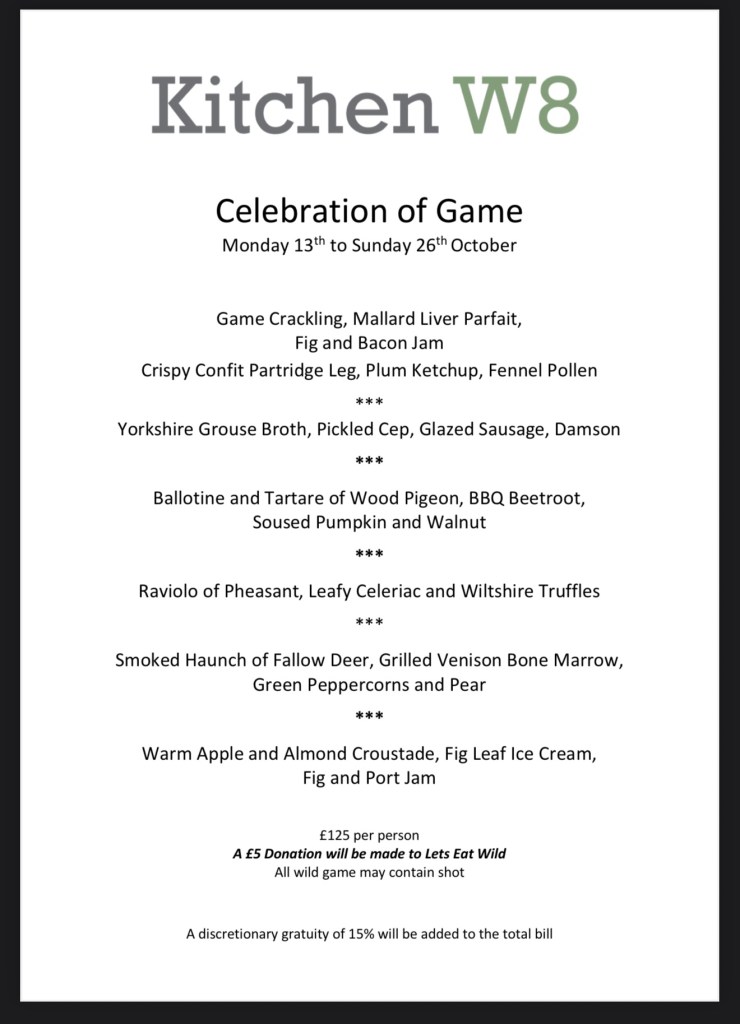
I did that terribly common thing — photographing some of the courses. My hurried phone snaps did not do the magnificent food justice!
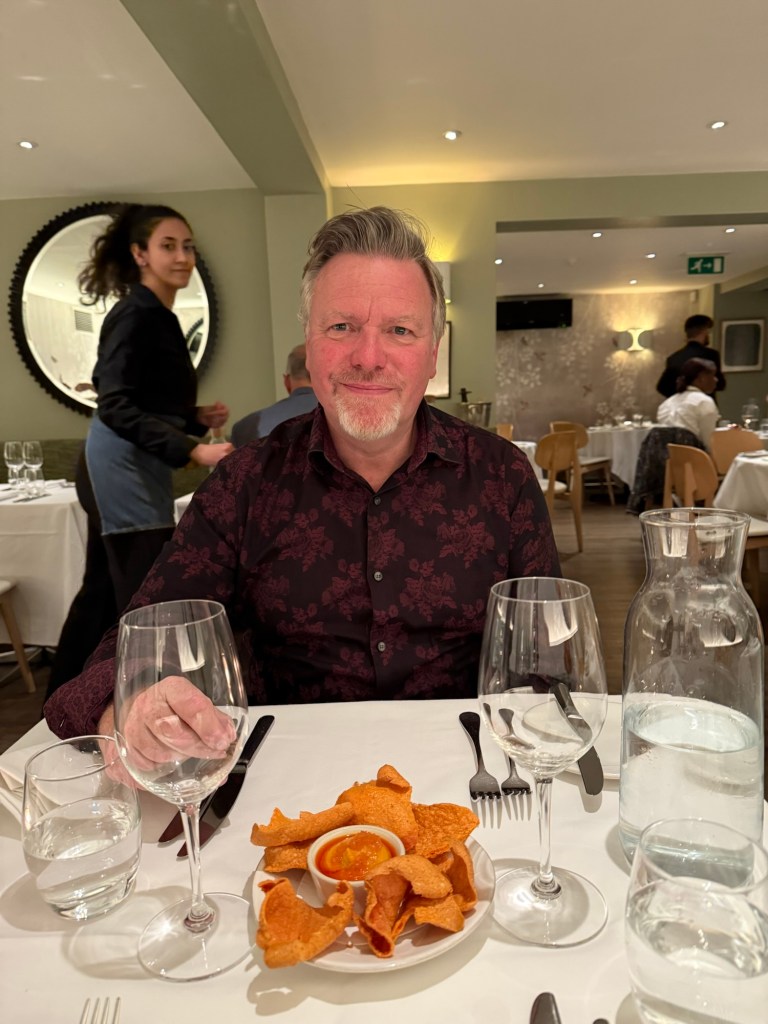
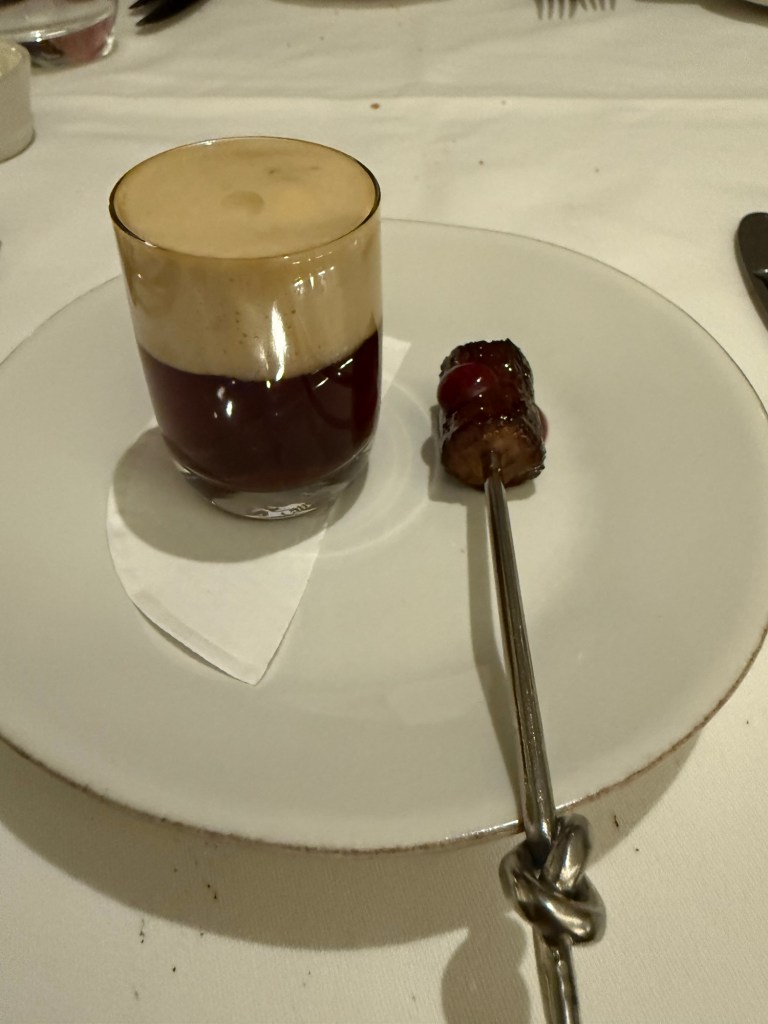
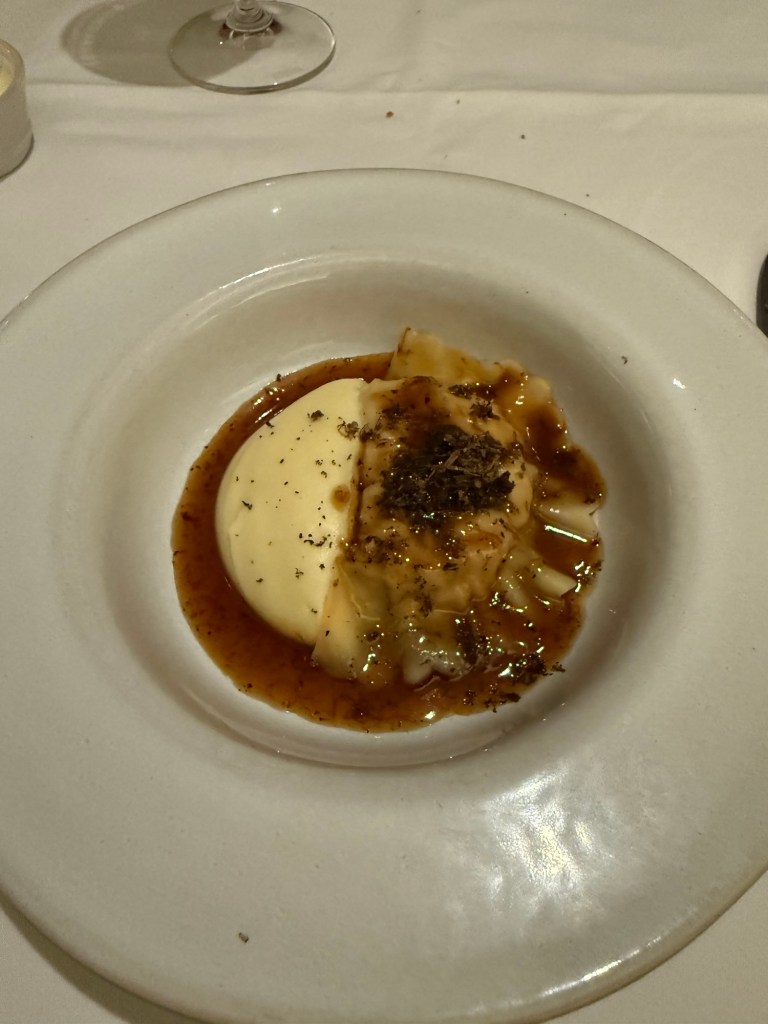
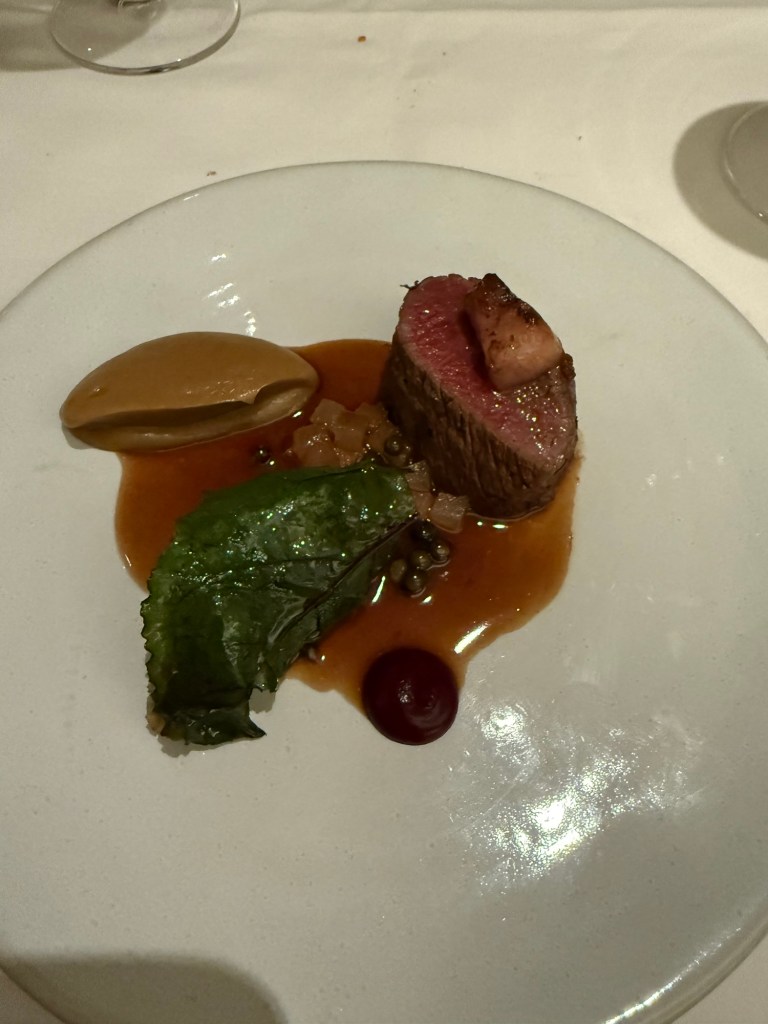
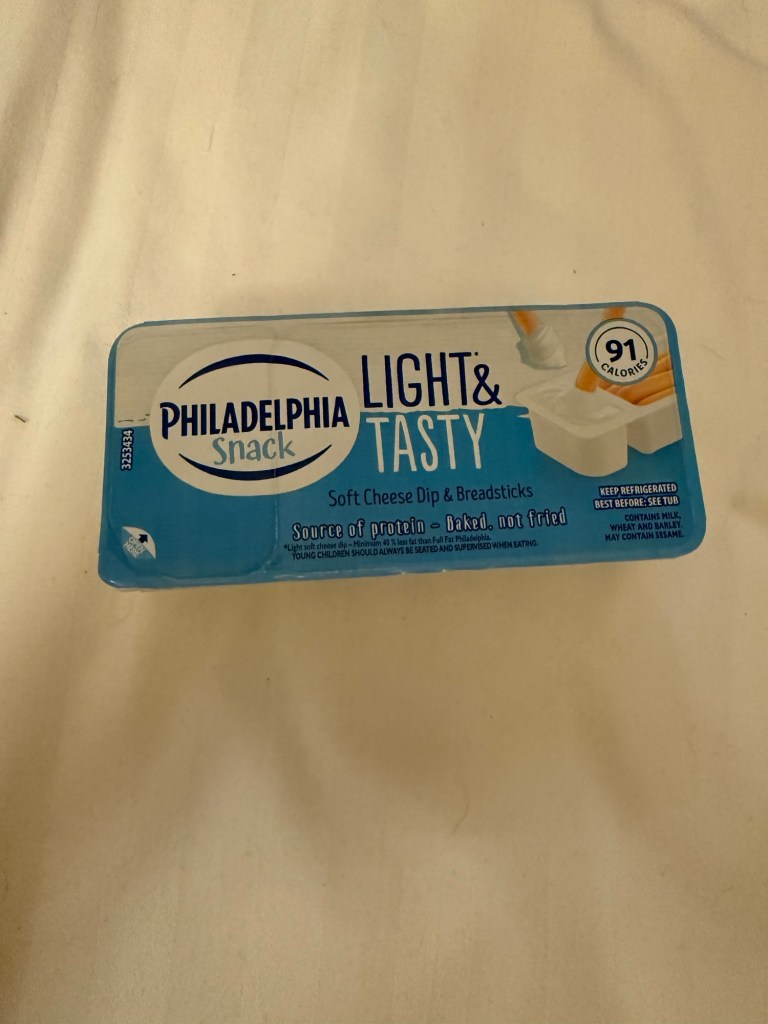
Satiated and a little inebriated, we wandered back to the hotel, where I shamelessly indulged in a cheese course in bed. 🧀
Saturday: Natural History and Rain
Saturday dawned cool and crisp. After breakfast at a nearby café, we set off for the Natural History Museum — the real purpose of our trip.
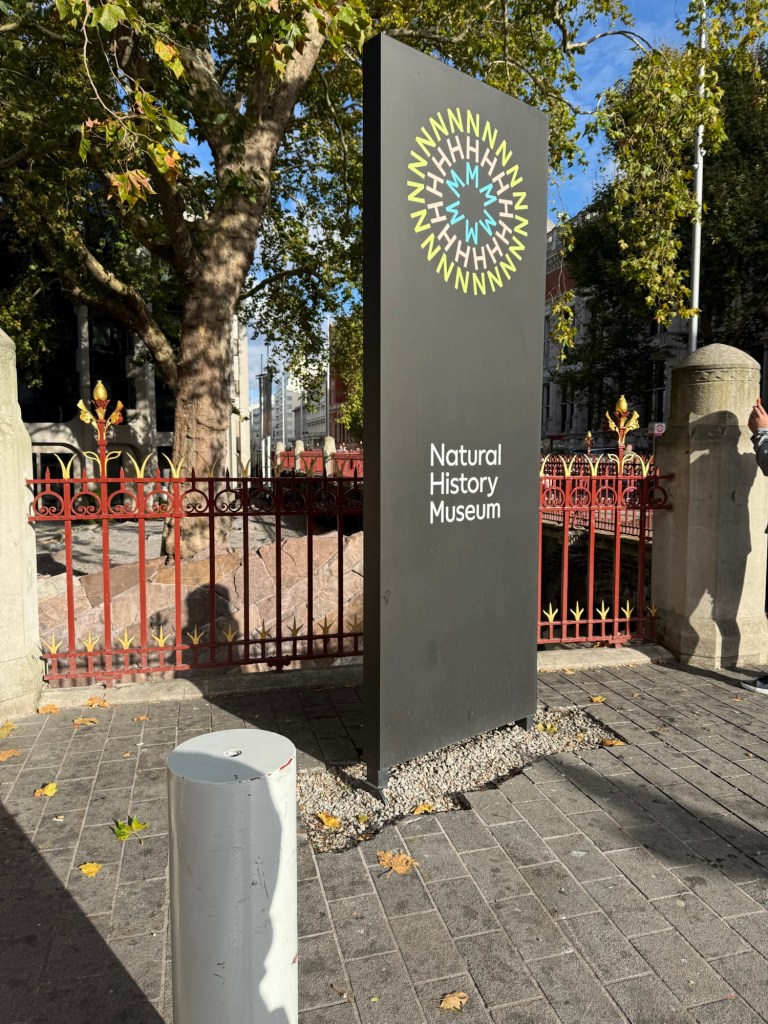
Thanks to Mark’s foresight, we smugly bypassed the enormous queues with our pre-booked passes.
I snapped a few photos in the grand entrance hall, but that was it. As a wildlife watcher, I couldn’t bring myself to photograph specimens of once-living creatures. Besides, I didn’t want to be one of those people holding up the line trying to capture every angle. (There were hundreds of them.)
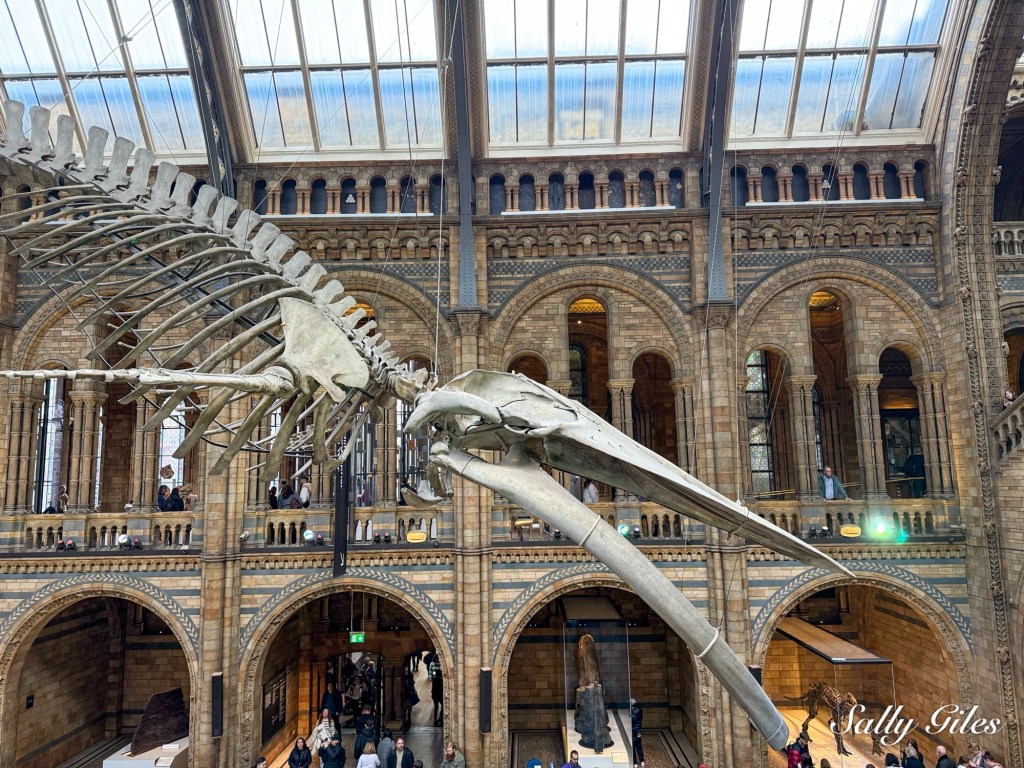
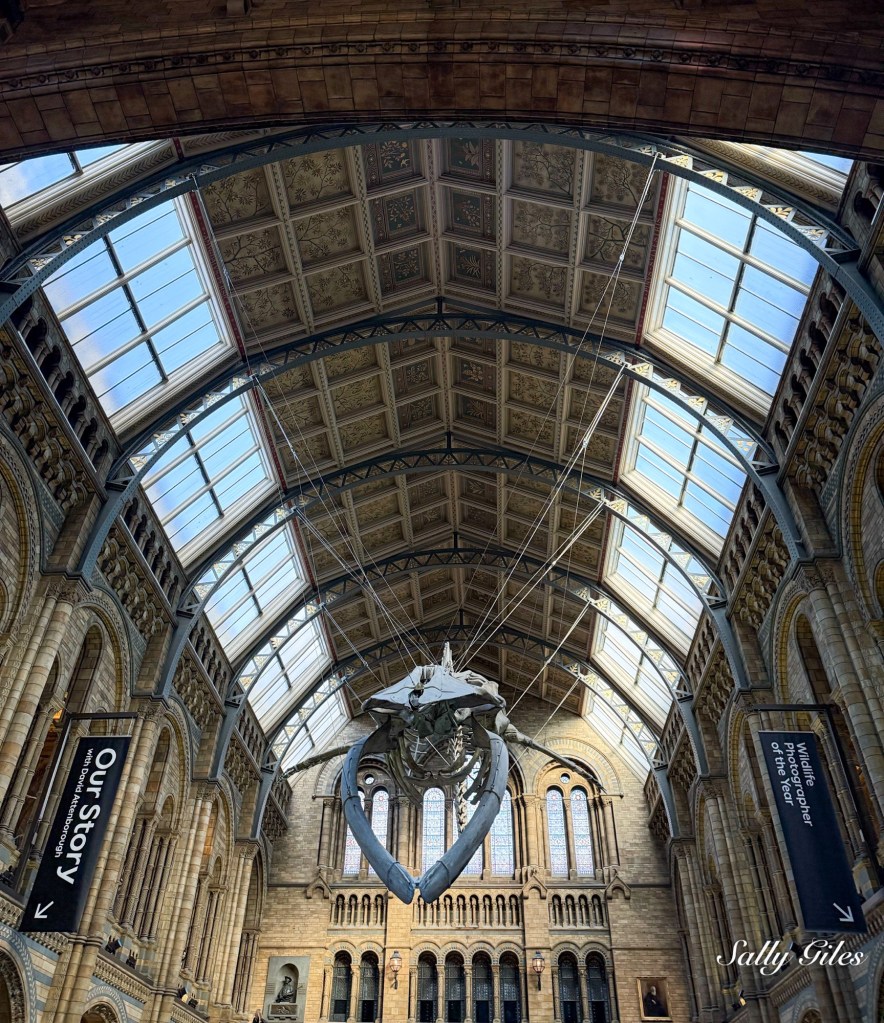
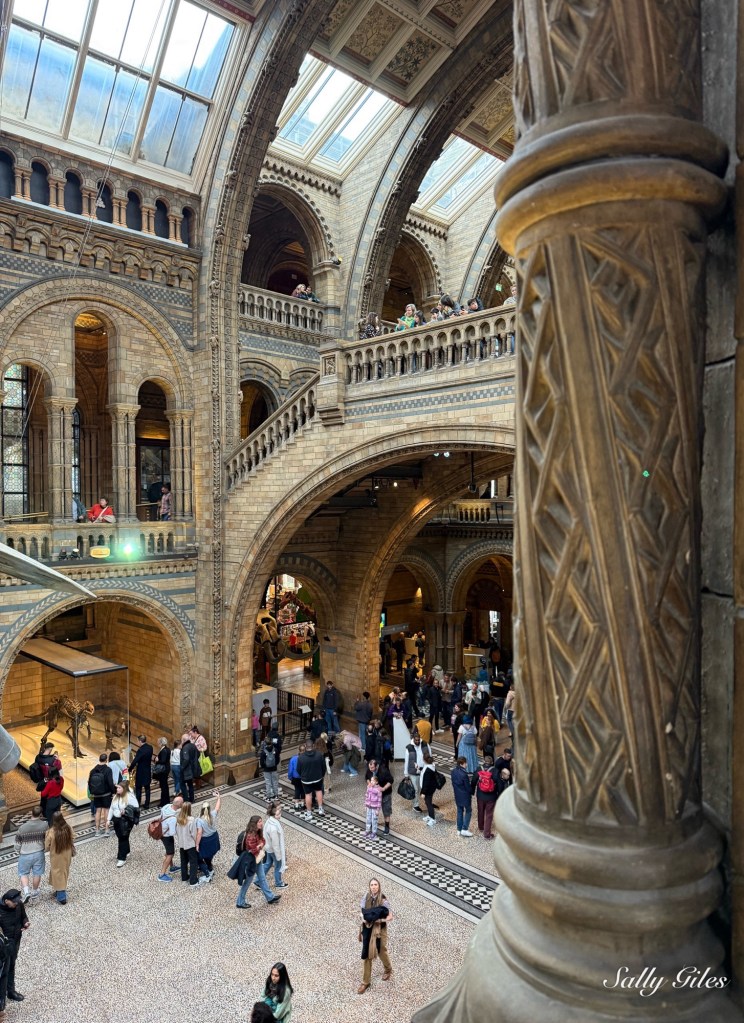
After several delightful hours exploring, we ventured into Leicester Square as rain began to fall — properly fall. London in the rain is an experience all its own. So we retreated to sample several light ales in a variety of local hostelries.
Dinner that evening was at J. Sheekey’s, a wonderful fish restaurant tucked away in St Martin’s Court.
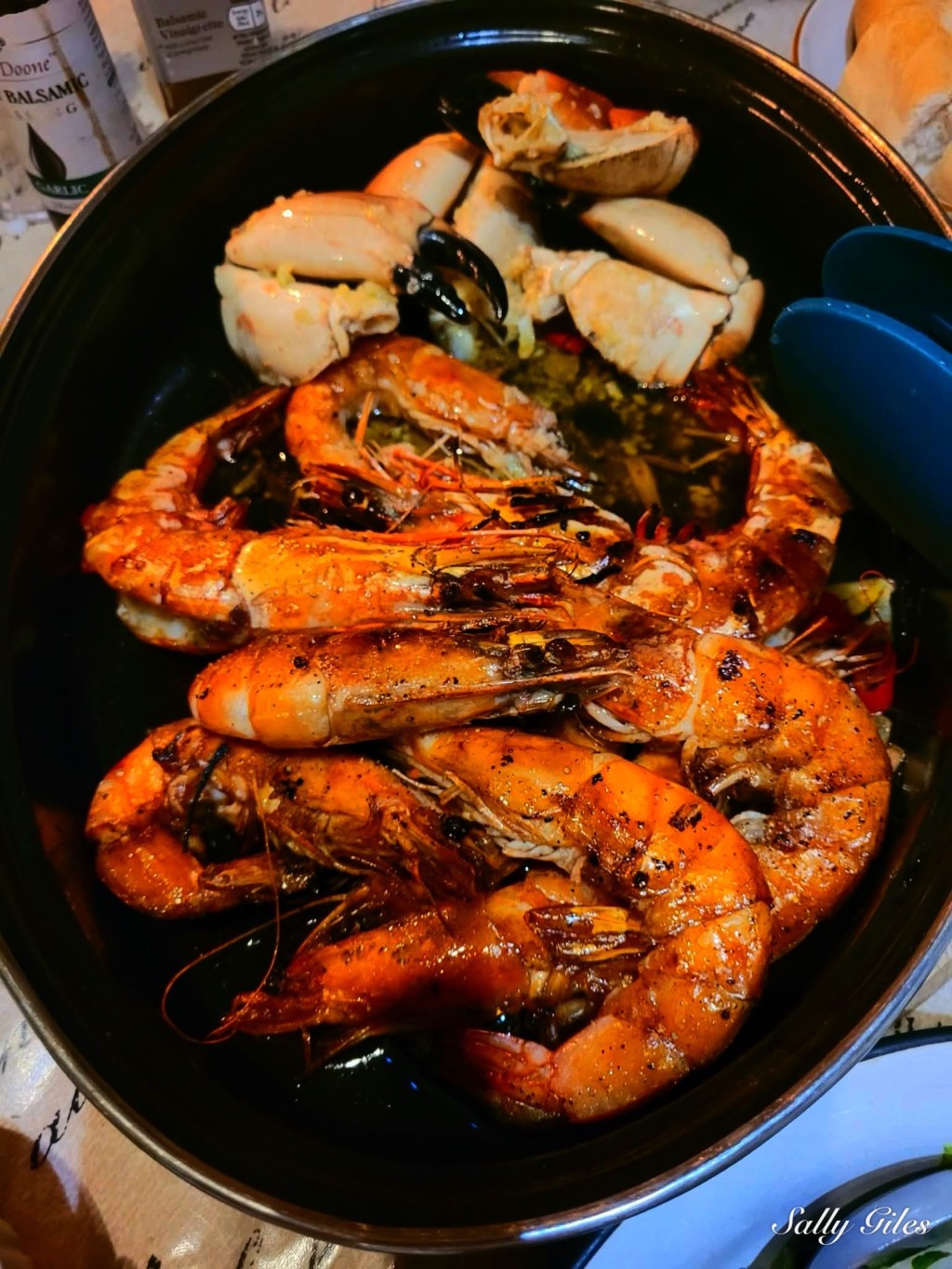
I had salmon tartare followed by Dover sole; Mark opted for octopus and grilled shellfish, accompanied by a little too many sides and a beautiful Sancerre.
Dessert was a single scoop of ice cream (there’s always room for dessert), and an intriguing and potent cocktail called The Irish Goodbye.
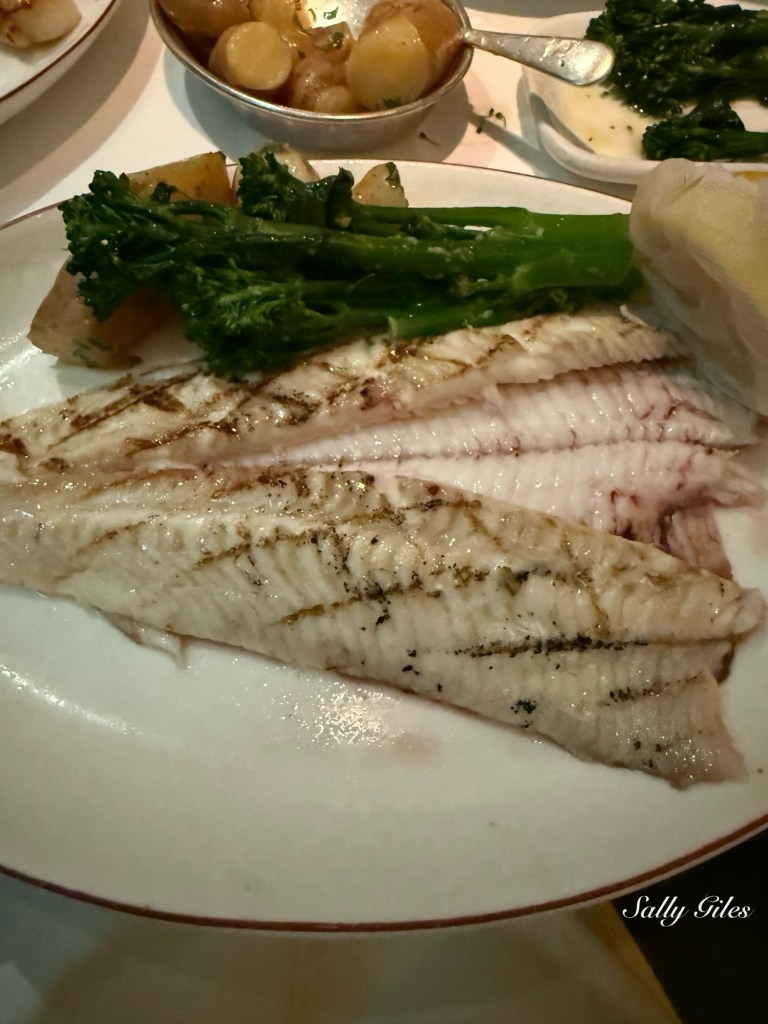
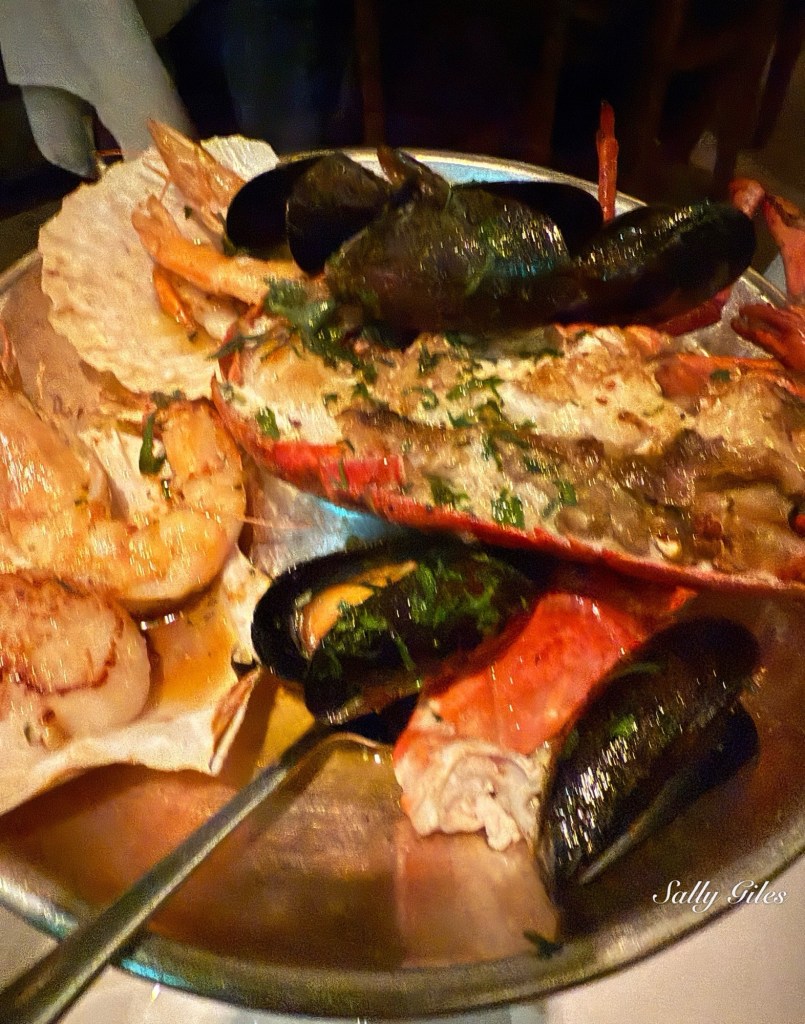
Opting for an Uber over the Underground, we passed familiar landmarks and Monopoly board squares before returning to the hotel at the rock-star hour of 8:45 p.m.
Our relaxing evening was briefly interrupted when Mark realised his phone was still in the back of the Uber. Thankfully, our heroic driver found it ringing and returned it to the hotel — an absolute legend.
Sunday: The Long Ride Home
We enjoyed an extra hour in bed thanks to the clocks going back, then began the long journey north. Unfortunately, the return trip was plagued by engineering works — cancelled trains, a two-hour sit on the floor to Crewe, and a cold 30-minute wait on the platform for the Manchester connection.
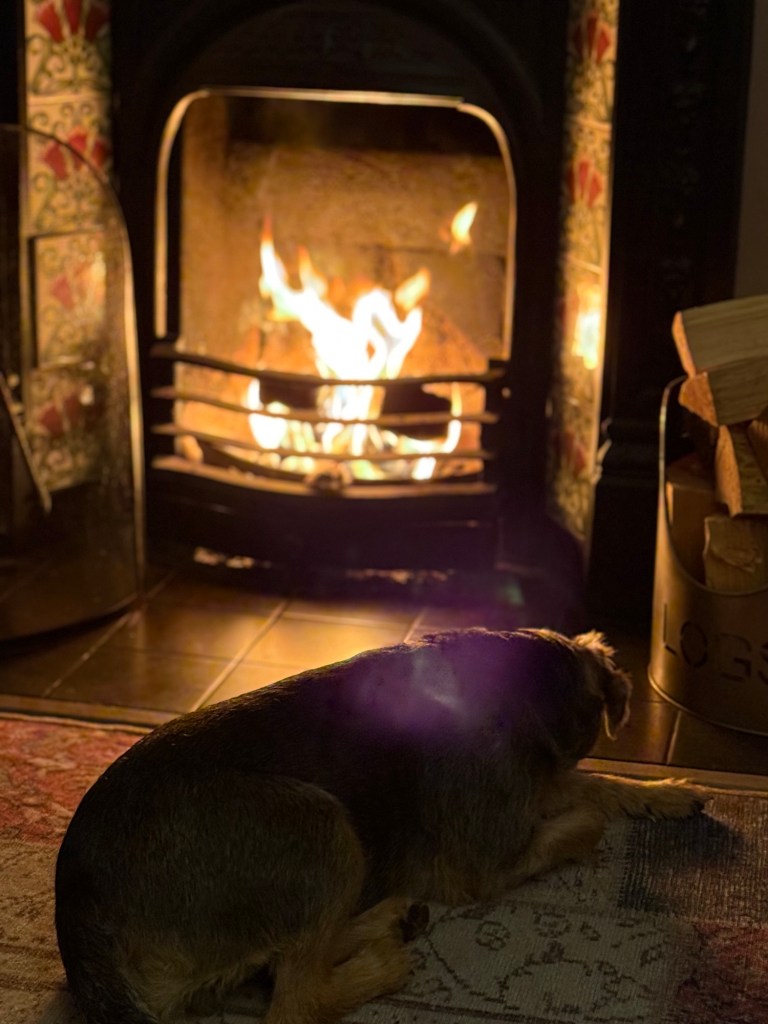
Still, we made it home eventually, collecting a very happy Pepper from her spa weekend at Nanna’s. We rounded off the trip exactly as it should end — in front of a roaring fire 🔥, a glass of wine in hand, and one contented little dog curled at our feet.
The Lens Dilemma
I’d been (good-naturedly) warned that this was not a birding holiday. Still, I couldn’t quite shake the question of which camera lens to take. After much internal debate — and a few eye-rolls from Mark — I finally settled on the m.zuiko 40-150mm 1:4 Pro; a wonderfully versatile piece of kit, capable of both close-up detail and moderate zoom.
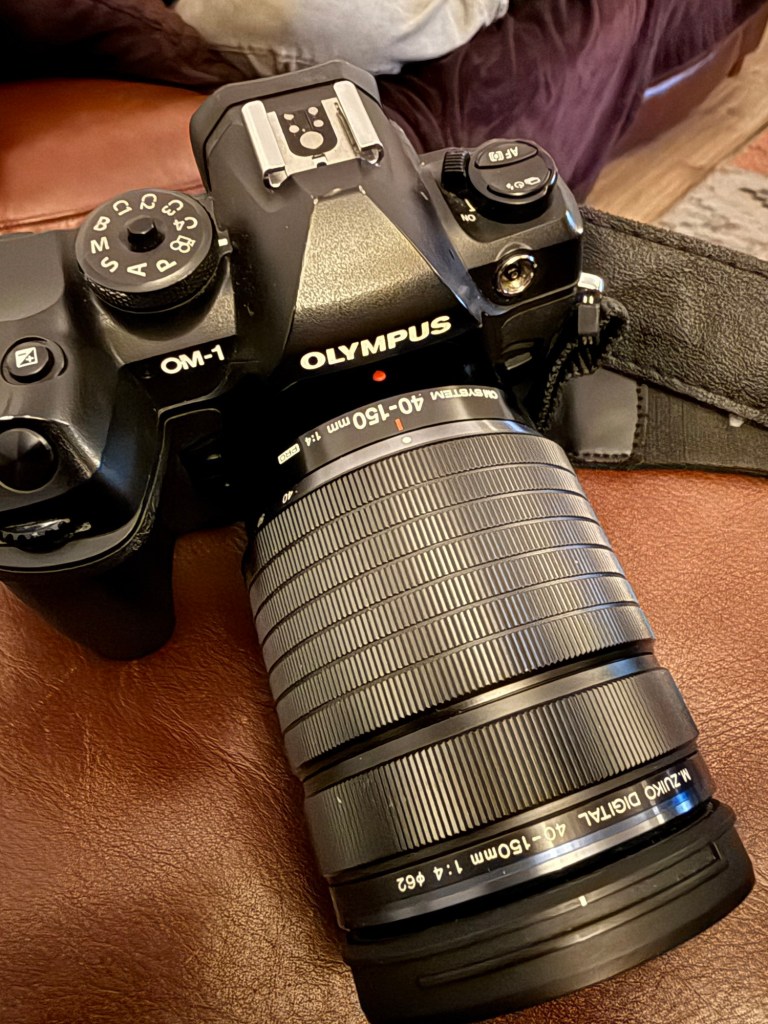
It’s been some time since I last used it, as my larger zooms tend to dominate most outings, but I’d forgotten just how good it really is — light, balanced, and beautifully clear. Looking through the photos afterwards, I was reminded that sometimes less really is more. Despite the shorter reach, the images were crisp and sharp, even when cropped. There’s a quiet satisfaction in rediscovering an old favourite, and I suspect this lens will be spending far less time in the bottom of my camera bag from now on.
Much like London itself, it proved that clarity doesn’t always come from distance. Sometimes, the best view is the one closest to you — a fleeting moment, a detail in stone, or a glint of light between the buildings.

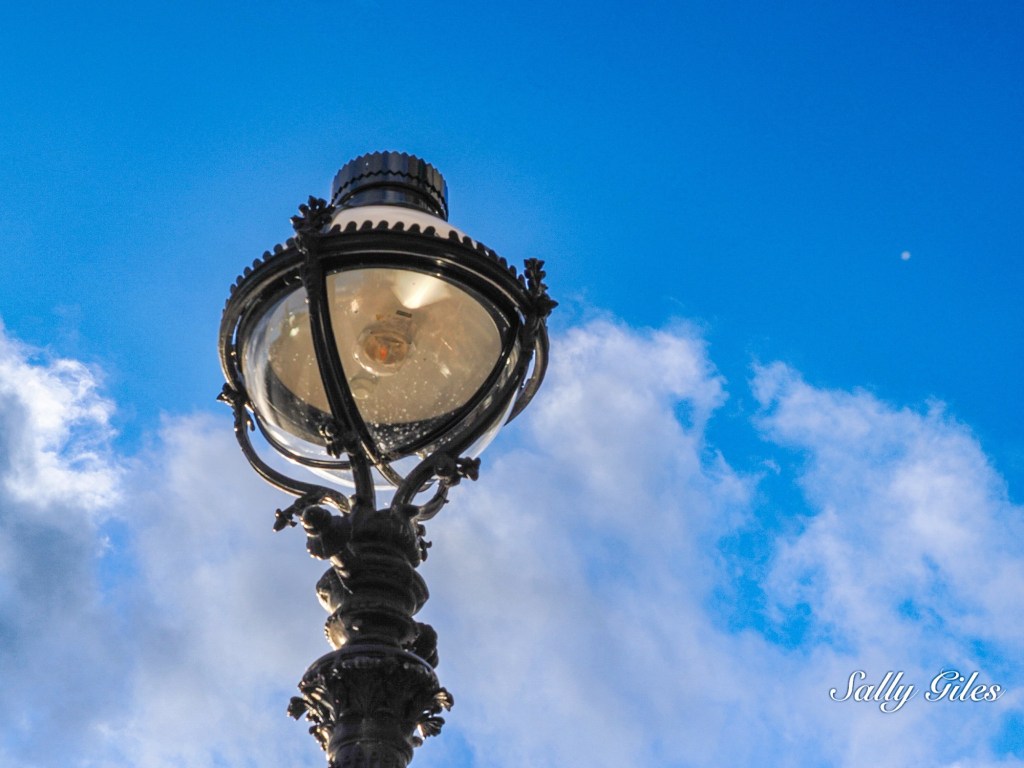
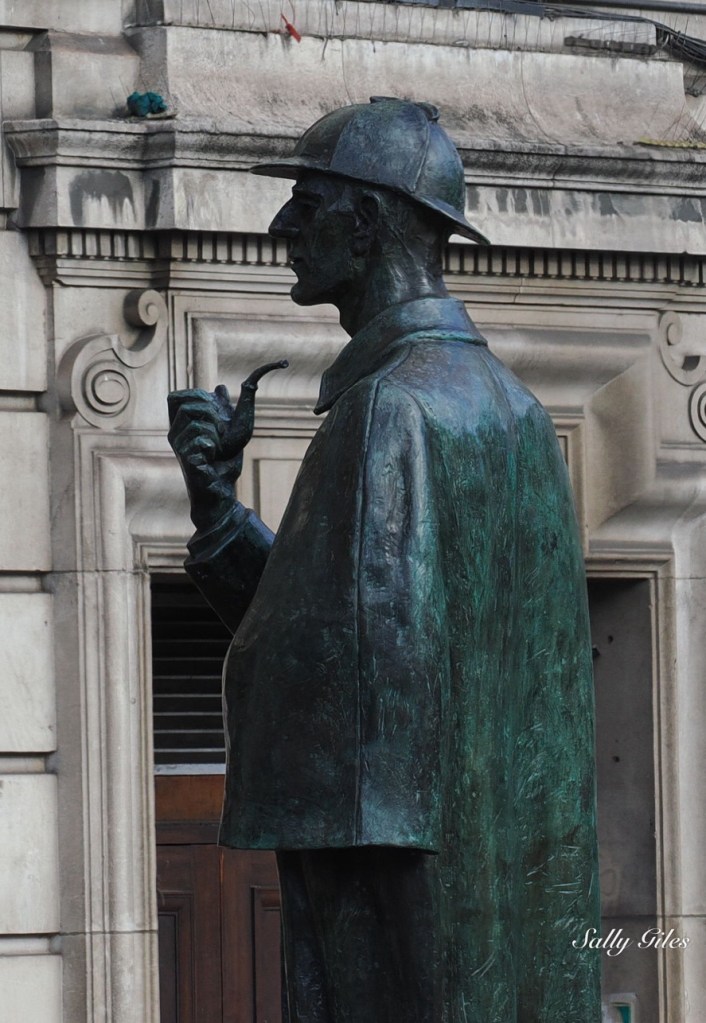
Our next adventure will take us back to the hills and the quiet beauty of the Castleton in the Peak District — a sharp contrast to the bustle of the Big Smoke. After the glittering lights, crowded pavements, and hum of the city, I’ll be glad to trade the sound of traffic for birdsong, and skyscrapers for the steady calm of moorland and sky.
Every journey leaves its echo, but home always hums the louder tune.


 A Dull Woman's Van Life
Leave a comment